Reunited after 64 years: RAF gunners who thought each other had ...15 Jul 2008 ... Evening Post, UK - Jul 21, 2008 ... The fifth son of a tramways inspector, Alan Brien was born on March 12 1925 and educated at Bede Grammer ...
www.iconocast.com
Friday, 21 November 2008


From The Times November 20, 2008
Memorial service: Alan Brien
There was much laughter in church, when a tape recording was played of Alan Brien’s last appearance on Quote Unquote.
“Violence is the repartee of the illiterate,” was the quotation presented to him. He was mystified. Could it be George Bernard Shaw, Brien wondered. Or Chesterton, perhaps? Whereupon Nigel Rees had to reveal that Brien himself had written those words in 1971.
The broadcaster Paul Vaughan, an Oxford contemporary, spoke of Brien’s brilliantly aphoristic leading articles when he was editor of Isis, and about the time Randolph Churchill introduced Alan to Evelyn Waugh. “I’ve just written your profile for Truth,” said Brien. Waugh ignored him, but later wrote to a friend, “Randolph hired a Jew to insult me in White’s.”
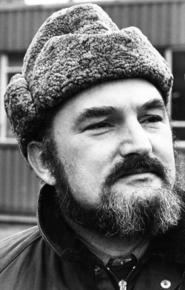
Brien’s Sunderland background was echoed in songs sung by Bob Davenport, the Tyneside folk singer. His fourth wife Jane remembered that he could be mistaken in the street for Sean Connery or Liberace at various times, and was able to say: “The fact is, Alan was very entertained by himself. He was rarely unhappy.”
Terry Jones read one of his favourite poems, My Beloved Compares Herself to a Pint of Stout, by Paul Durcan, and Valerie Grove recalled one of his 1960s essays in the New Statesman, remarking on how London’s shop names resembled a nanny addressing her charge in Kensington Gardens: “Don’t be so selfridge, Master Fortnum. Eat up all your harrods, and then you can have a gorringe. You’ll do yourself a gamage, mark my words, unless you have a c.c. and a. every morning on the derry and tom. Ponting is rude. I knew a child once died of the whiteleys after eating too many burberries.” VG
A memorial service for Alan Brien was held on November 19 at St Paul’s Church, Covent Garden. The Rev Simon Grigg, rector, officiated and said the bidding prayers.
Mr Terry Jones read My Beloved Compares Herself to a Pint of Stout by Paul Durcan; Mr Nigel Wild read Alan Brien’s Diary, from The Sunday Times, June 18, 1972; Mrs Valerie Grove read a piece written by Alan, published in the New Statesman, May 23, 1969, and gave an address, along with Ms Jane Hill, widow, and Mr Paul Vaughan.
During the service Mr Bob Davenport sang Herrin’s Head; Jerusalem by William Blake, to the traditional tune; The Rose Tree; and The Drum (Retort on Mordent’s The Call) by John Scott of Amwell, accompanied by Mr Roger Digby, anglo concertina. Ms Susie Honeyman, violin, performed her own composition entitled In the Boiler Room and a recording of the Morriston Orpheus Choir of Wales singing The Internationale from The Road to Wigan Pier was played. Recordings of Violence is the Repartee of the Illiterate from Radio 4, 1985, and Sacred Cows an extract from Face Your Image, presented by David Dimbleby in 1974, were also played.
Among others present were: Mr and Mrs Adam Brien (son and daughter-in-law), Mr and Mrs John Mckelvie, Mr and Mrs Richard Arison, Mr and Mrs Stuart Verrilli (sons-in-law and daughters), Ms Alyson Brien (daughter), Mrs Joyce Hill (mother-in-law), Mr Peter Hill (brother-in-law), Mrs Alexa Gilpin Hill (sister-in-law), Ms Lucy Gilpin Hill (niece), Mrs Muriel Halls, Miss Amy McKelvie, Miss Esther McKelvie, Miss Isabella Arison, Mr Jack Arison, Miss Megan Brien, Mr Josh Brien and Burt Brien (grandchildren), Mr Malcolm Carr, Captain Phillip Carr with other members of the family.
Sir Arnold and Lady Wesker, Mr Trevor Grove, Ms Andrea Galer, Ms Jane Bond, Mr and Mrs David Stone, Mr and Mrs George Carey, Mr and Mrs Jack Waterman, Mr Nathan Silver, Ms Roxy Beaujolais, Ms Deborah Moggach, Ms Catherine Rickman, Mr Felix Jay, Mrs Margaret Legg, Ms Fiona Legg, Mr Jock McFadyen, Ms Annie Morag McFadyen, Mr and Mrs Karl Miller, Ms Petra Markham, Mr David Walsh, Mr Philip Purser, Mr John Spurling, Ms Jean Lovell Davis, Ms Anna Soderstrom, Ms Carole Holland, Ms Sarah Holland, Ms Julia Holland, Ms Gilly Oakes, Ms Mary Kenny, Ms Marjorie Wallace, Mr Ken Lukowiak, Ms Kersti French, Ms Nicci Gerrard, Mr Sean French, Ms Ursula Owen, Ms Jo Batterham, Mr and Mrs Grenville Robinson, Mr Graham Binmore, Mr Jo Simon, Mr Ian Christie, Mr and Mrs Wally Fawkes, Mr Ronnie Payne, Ms Celia Haddon, Mr Nigel Rees, Ms Julia Hobsbawm, Ms Teresa Grimes, Ms Harriet Green, Ms Yeen Au, Ms Lynn Barber, Ms Mary Clemmey, Mr Ernie Eban, Ms Victoria Glendinning, Ms Anne Holmes-Drewry, Ms Alison Telfer, Ms Diana Melly, Ms Angela Neustatter, Mr and Mrs Philip Thomas, Ms Finola Quinn, Ms Estella Weldon, Ms Eleanor Bron, Mr David Maccoby, Mr Christopher Gardner, Ms Monica Petzal, Ms Olivia Fane, Mr and Mrs Paul Johnson, Ms Carolyn Gowdy, Ms Monica Petzal, Mr Joseph Steeples, Mr Daniel Carrier, Mr John Forman, Ms Emma Gibson, Mr Graham Tayar, Mr Paul Shearsmith, Ms Rachel Miller, Mr David Croft, Ms Maria Wakely, Ms Naomi Fabian Miller, Ms Serena Inskip, Ms Celia Lowenstein, Mr Godfrey Smith, Mr Peter Preston, Mr and Mrs McGrath, Mr Michael Leapman, Ms Pippa Vaughan, Mr and Mrs Bernard Carnell, Mr Gerald Wakelin, Mr Ivor Samuels, Ms Elspeth Hamilton, Mr Christopher Cross, Mr Phil Grey, Ms Vicki Jung, Ms Jane McAusland, Mr Colin Crewe, Ms Josephine Marston, Mrs Pat Hutchison, Mr Nick Callow, Ms Mary Morrison, Mr Steve Swannell, Ms Melissa Pow, Mr Robert Robinson, Mr Al Alvarez, Ms Irma Kurtz, Ms Jane Brown, Mr Don Cameron, Mr and Mrs Hilary Rubinstein, Ms Shirley Conran, Ms Dorothy Rowe, Ms Joan Bakewell, Ms Nina Bawden, Mr Russell Enoch, Ms Katharine Whitehorn, Mr Hunter Davis, Ms Margaret Forster, Ms Cynthia Kee, Ms Claire Tomalin, Mr Michael, Frayn, Mr and Mrs Herbert Kretzmer, Mr and Mrs Jay Landesman, Mr Lewis Wolpert, Mr David Galliford, Mr and Mrs John Mortimer, Mrs Gladys Glascoe Mr Philip French (Critics Circle), Mr Mark Le Fanu (Society of Authors), Ms Eileen Gunn (general secretary, Royal Literary Fund) together with many more friends and former colleagues.
There was much laughter in church, when a tape recording was played of Alan Brien’s last appearance on Quote Unquote.
“Violence is the repartee of the illiterate,” was the quotation presented to him. He was mystified. Could it be George Bernard Shaw, Brien wondered. Or Chesterton, perhaps? Whereupon Nigel Rees had to reveal that Brien himself had written those words in 1971.
The broadcaster Paul Vaughan, an Oxford contemporary, spoke of Brien’s brilliantly aphoristic leading articles when he was editor of Isis, and about the time Randolph Churchill introduced Alan to Evelyn Waugh. “I’ve just written your profile for Truth,” said Brien. Waugh ignored him, but later wrote to a friend, “Randolph hired a Jew to insult me in White’s.”
Brien’s Sunderland background was echoed in songs sung by Bob Davenport, the Tyneside folk singer. His fourth wife Jane remembered that he could be mistaken in the street for Sean Connery or Liberace at various times, and was able to say: “The fact is, Alan was very entertained by himself. He was rarely unhappy.”
Terry Jones read one of his favourite poems, My Beloved Compares Herself to a Pint of Stout, by Paul Durcan, and Valerie Grove recalled one of his 1960s essays in the New Statesman, remarking on how London’s shop names resembled a nanny addressing her charge in Kensington Gardens: “Don’t be so selfridge, Master Fortnum. Eat up all your harrods, and then you can have a gorringe. You’ll do yourself a gamage, mark my words, unless you have a c.c. and a. every morning on the derry and tom. Ponting is rude. I knew a child once died of the whiteleys after eating too many burberries.” VG
A memorial service for Alan Brien was held on November 19 at St Paul’s Church, Covent Garden. The Rev Simon Grigg, rector, officiated and said the bidding prayers.
Mr Terry Jones read My Beloved Compares Herself to a Pint of Stout by Paul Durcan; Mr Nigel Wild read Alan Brien’s Diary, from The Sunday Times, June 18, 1972; Mrs Valerie Grove read a piece written by Alan, published in the New Statesman, May 23, 1969, and gave an address, along with Ms Jane Hill, widow, and Mr Paul Vaughan.
During the service Mr Bob Davenport sang Herrin’s Head; Jerusalem by William Blake, to the traditional tune; The Rose Tree; and The Drum (Retort on Mordent’s The Call) by John Scott of Amwell, accompanied by Mr Roger Digby, anglo concertina. Ms Susie Honeyman, violin, performed her own composition entitled In the Boiler Room and a recording of the Morriston Orpheus Choir of Wales singing The Internationale from The Road to Wigan Pier was played. Recordings of Violence is the Repartee of the Illiterate from Radio 4, 1985, and Sacred Cows an extract from Face Your Image, presented by David Dimbleby in 1974, were also played.
Among others present were: Mr and Mrs Adam Brien (son and daughter-in-law), Mr and Mrs John Mckelvie, Mr and Mrs Richard Arison, Mr and Mrs Stuart Verrilli (sons-in-law and daughters), Ms Alyson Brien (daughter), Mrs Joyce Hill (mother-in-law), Mr Peter Hill (brother-in-law), Mrs Alexa Gilpin Hill (sister-in-law), Ms Lucy Gilpin Hill (niece), Mrs Muriel Halls, Miss Amy McKelvie, Miss Esther McKelvie, Miss Isabella Arison, Mr Jack Arison, Miss Megan Brien, Mr Josh Brien and Burt Brien (grandchildren), Mr Malcolm Carr, Captain Phillip Carr with other members of the family.
Sir Arnold and Lady Wesker, Mr Trevor Grove, Ms Andrea Galer, Ms Jane Bond, Mr and Mrs David Stone, Mr and Mrs George Carey, Mr and Mrs Jack Waterman, Mr Nathan Silver, Ms Roxy Beaujolais, Ms Deborah Moggach, Ms Catherine Rickman, Mr Felix Jay, Mrs Margaret Legg, Ms Fiona Legg, Mr Jock McFadyen, Ms Annie Morag McFadyen, Mr and Mrs Karl Miller, Ms Petra Markham, Mr David Walsh, Mr Philip Purser, Mr John Spurling, Ms Jean Lovell Davis, Ms Anna Soderstrom, Ms Carole Holland, Ms Sarah Holland, Ms Julia Holland, Ms Gilly Oakes, Ms Mary Kenny, Ms Marjorie Wallace, Mr Ken Lukowiak, Ms Kersti French, Ms Nicci Gerrard, Mr Sean French, Ms Ursula Owen, Ms Jo Batterham, Mr and Mrs Grenville Robinson, Mr Graham Binmore, Mr Jo Simon, Mr Ian Christie, Mr and Mrs Wally Fawkes, Mr Ronnie Payne, Ms Celia Haddon, Mr Nigel Rees, Ms Julia Hobsbawm, Ms Teresa Grimes, Ms Harriet Green, Ms Yeen Au, Ms Lynn Barber, Ms Mary Clemmey, Mr Ernie Eban, Ms Victoria Glendinning, Ms Anne Holmes-Drewry, Ms Alison Telfer, Ms Diana Melly, Ms Angela Neustatter, Mr and Mrs Philip Thomas, Ms Finola Quinn, Ms Estella Weldon, Ms Eleanor Bron, Mr David Maccoby, Mr Christopher Gardner, Ms Monica Petzal, Ms Olivia Fane, Mr and Mrs Paul Johnson, Ms Carolyn Gowdy, Ms Monica Petzal, Mr Joseph Steeples, Mr Daniel Carrier, Mr John Forman, Ms Emma Gibson, Mr Graham Tayar, Mr Paul Shearsmith, Ms Rachel Miller, Mr David Croft, Ms Maria Wakely, Ms Naomi Fabian Miller, Ms Serena Inskip, Ms Celia Lowenstein, Mr Godfrey Smith, Mr Peter Preston, Mr and Mrs McGrath, Mr Michael Leapman, Ms Pippa Vaughan, Mr and Mrs Bernard Carnell, Mr Gerald Wakelin, Mr Ivor Samuels, Ms Elspeth Hamilton, Mr Christopher Cross, Mr Phil Grey, Ms Vicki Jung, Ms Jane McAusland, Mr Colin Crewe, Ms Josephine Marston, Mrs Pat Hutchison, Mr Nick Callow, Ms Mary Morrison, Mr Steve Swannell, Ms Melissa Pow, Mr Robert Robinson, Mr Al Alvarez, Ms Irma Kurtz, Ms Jane Brown, Mr Don Cameron, Mr and Mrs Hilary Rubinstein, Ms Shirley Conran, Ms Dorothy Rowe, Ms Joan Bakewell, Ms Nina Bawden, Mr Russell Enoch, Ms Katharine Whitehorn, Mr Hunter Davis, Ms Margaret Forster, Ms Cynthia Kee, Ms Claire Tomalin, Mr Michael, Frayn, Mr and Mrs Herbert Kretzmer, Mr and Mrs Jay Landesman, Mr Lewis Wolpert, Mr David Galliford, Mr and Mrs John Mortimer, Mrs Gladys Glascoe Mr Philip French (Critics Circle), Mr Mark Le Fanu (Society of Authors), Ms Eileen Gunn (general secretary, Royal Literary Fund) together with many more friends and former colleagues.
Evening Standard: The Londoner's Diary, 20th November 2008
* VETERAN jazzman Wally Fawkes played the clarinet in the Garrick Club yesterday afternoon, following a memorial service for Alan Brien, critic and columnist for The Spectator, Punch, the New Statesman and The Sunday Times. It's thought to be a first for the crusty old Covent Garden watering hole. One or two members claimed Fawkes hadn't played for years, but Londoner's Diary readers will recall that he performed at the launch of Humphrey Lyttelton's posthumous book only last month. Although Brien was a member of the Garrick, he refused to wear a tie when he didn't feel like it, until he was persuaded to resign.
I posted a comment to say Alan didn't resign because of a tie - he happily wore a bow tie after all - he resigned because the club wouldn't allow women members.
I posted a comment to say Alan didn't resign because of a tie - he happily wore a bow tie after all - he resigned because the club wouldn't allow women members.
Saturday, 1 November 2008
'Another hoary old, yellowing, cutting...'
'Another hoary old, yellowing, cutting: this time an article Alan wrote for the New Statesman during the World Cup in 1966, when teams from football-playing nations around the world descended on host-country, England, to play matches in grounds all over the country, including Sunderland's Roker Park, now, sadly demolished.' sent by Malcolm.
NEW STATESMAN 22 JULY 1966 p139
ARTS
Out of London: Sunderland for the Cup
ALAN BRIEN
‘Playing Football is Strictly Prohibited’ said the notice between the deck-chair attendant and the pie-and-chips stall on the lower promenade. The pale golden Sunderland sun hung in the creamy postcard blue sky like a heraldic emblem. For once the fizzy, ginger-beer North Sea stretched waveless and silent to the curved horizon like a rippling expanse of oiled silk. On the first morning of my holiday visit to my home town, I led the family safari of mother, wife and two small children to the water’s edge, carrying as badges of my domestic office a bottle in one hand and a blanket in the other. As I supervised the unloading of the pack team into a defensive half-circle, I said: ‘This is what I call the sea-side’. And so it was.
But it was also the second week of the World Cup season in the football-crazy North-East. No sooner had I placed the metal tray with its precious load of drinks in the heart of the encampment than a large spotted ball dropped from the heavens and sent the paper cups spilling and scooting for cover. It was the classic situation envisaged by Charles Atlas in those body- building ads in my schoolboy pulp magazines. Here was the beach-bully at last, kicking sand in my face, while my loved ones mimed indignation. But it was a 14-stone weakling who had difficulty struggling up out of the canvas embrace of his chair to face the two brown, muscular, young seven-stone athletes leaning over him with apologetic grins. I had waited too long to send in the coupon for that free, without-obligation first lesson and the weight of middle-aged parenthood lay heavy on my pullovered, shawl-wrapped shoulders as I preached a sermon on neighbourly decorum to the almost naked oafs. I looked around along the great scimitar of sand, wet and red and coarse and shining below the tidemark, dry and white and fine and scalloped above, and realised I was in the middle of an enormous practice pitch. League upon league of Walter Mittys were playing at Bobby Charlton, kicking and heading and diving and dribbling. Rub-a- dub-dub went the noise of balls endlessly pummelled and thumped against the towering sea wall, shooting off at unexpected angles as they hit the corners of the massive stone blocks, rocketing up and up into the sun until they were caught in the high off shore breeze and then curving in a smooth parabola to plop back on the gently swirling water. Young and old, toddlers and grandfathers, fat and grey as lard or hard and weathered as teak, each alone and oblivious in a mass opium dream of football fame, speeding across an imaginary Roker Park towards an open goal-mouth. Meanwhile a family party had materialised from nowhere in the penalty area.
As the sun sank improbably behind the backs of our necks on this eastward-facing beach, the area available for play had in creased ten-fold but the soccer sandmen were still arriving. Sunderland regards it self as the homeland of football, still remembering the day when they could point with modest pride to their unique record of being the only team never to be relegated from the First Division. Local historians even claim that Roker Park was the first place where the spectators ever developed the habit of flooding over the barriers to hug and punch their heroes after a goal. Yet though the shops are full of World Cup symbols, and the Sunderland Echo printed a message of welcome in Russian from the Mayor to the visiting Soviet team, the fans are largely staying at home to watch the Cup on television.
Admittedly, the two matches to dale — Chile v. Italy and Italy v Russia — have been mediocre. The Russians were obviously the best team and the best team won — as every spectator observed to his mate in exactly those words as we marched 50-abreast, like a mob of strikers in a Soviet film, through the suburban streets after the Saturday afternoon game. But the style seemed to me oddly mechanical and academic, as if they were taking part in some athletic drill. There was no aggression, no sinewy anger or intelligent pugnacity, so that a beautifully executed sequence of tricky passes up the field would culminate in the placing of the ball with mild accuracy exactly in the arms of the opposing goalkeeper. The Italian supporters chanted their slogans through transistorised loud hailers, syncopating them with rhythmic clapping and tattoos of foot-beating. The few Russians waved their red flags and encouraged players by the names and nick names. But the majority of locals, massed in the standing room at both ends, preserved an almost contemptuous aloofness, occasionally approving a clever manoeuvre or a showy save, but never letting loose that great rumbling, roaring steam-locomotive howl of partisan excitement I remember from pre-war days.
I think the Sunderland apathy had only a little to do with the quality of the football. The truth is that Wearsiders, cut off from through-traffic by road or rail from the north to south, form their own cloth-capped, weird-accented Ruritania as insulated and nationalistic as the Welsh or the Cornish. When my friend Blank was film critic of the Daily Express in years gone by. there was a notice on the subs’ table which read: ‘In Blank’s copy, for “Ava Gardner” read “Lana Turner”, and for “Lana Turner” read “Ava Gardner”.’ He explained to me that no errors had ever occurred when he always confused these two stars because the subs realised that he always confused these two stars. Until the age of 18, though intellectually I knew better, emotionally I still considered ‘Sunderland’ and ‘England’ as more or less interchangeable terms.
On top of Sunderland/England, like a bonnet worn by a witch riding an invisible broomstick, sat Scotland, a nation of dour, humourless trusties, fake rebels aching to be bought over by the shallow South at the expense of everything but their rolling consonants. Below lay the Midlands. Manchester, Yorkshire and the rest, a country of born chargehands and natural foremen, tight-lipped stingy organisation men. To the West, Ireland was scarcely more an island than Wales — two Celtish strongholds of shifty foreigners who, fortunately for them, did not often dare invade the North-East — which, anyway, did not contain the easy pickings they relished. Right down at the base, practically a suburb of Paris, a dependency of Rome, lay Mediterranean, sub tropical London, the Latin Quarter of King’s Cross, visited only by beer-crated coach parties, or on specially chartered, indestructible trains, for royal marriages, jubilees and coronations and equally sacred ceremonial Cup matches. To us, the compass point was embedded in the mouth of the River Wear and every extension of the free leg took you further away from the heart of England, Sunderland.
Italy, Russia Chile, North Korea - what are these but outsiders’ substitutes for Sunderland? They would have to have superlative football teams to get us out there cheering. This intense conviction of superiority runs alongside a deep, sceptical, comical condescension towards the town itself and most of its inhabitants. When I returned last week, I had not been in the place for more than an overnight swoop for 10 years or more. In my memory, though I constantly boosted it as a mixture of Dodge City and Coronation Street, it had become a low, dull, monochrome panorama of houses which should have been called hice and of ugly factories, It seemed to me on every previous visit, as the special train strayed off the main line and wormed its tedious way across to the forgotten coast, that the sunshine and the blue skies ‘would be cut off within a few miles of Sunderland by a barrier which reached to the clouds. - There might almost have been great signs by the track announcing ‘Here Be Grendel’s Lair — Beowulf Turn Back’.
This time, perhaps because my American wife enjoyed the place and my metropolitan children begged to be allowed to come back next year, I began to see the whole area as a wild, lush country landscape with great corridors of dazzling sand and mysterious rock dotted all over with outsize working toys of shipyards, cement factories, forests of cranes, exhibitions of ships, startling bridges over valleys as well as rivers, which appealed instantly to an eye for the picturesque. I was not surprised to find that Lowry was staying here, painting a new series of waterscapes and harbour views. There is a peculiar excitement and satisfaction in coming down the valley of the upper Wear - itself rich, fruity, flowery land banked by bare rolling moor like the Dordogne with a bite in the air - upon a glowing white factory with a chimney like an obelisk. The pit heads - wheels endlessly spinning, lines of buckets building geometrical mountains of gun-metal grey, serviced by line upon line of clinking trucks - have the sort of line and pattern artificially and pointlessly imitated by many modern sculptors. In the age of the motor car, countryside which cannot be bettered in France or Ireland lies within an hour’s leisurely drive.
I also began again to appreciate that friendly argumentative cynicism, expressed in long, repetitive, probing paragraphs of natural rhetoric, which is the characteristic of the North-Easterner. They have seen too much of politicians, clergymen, social workers, educationalists, to expect life to be changed by outside forces. I was told of a visiting VIP, admiring a new council estate, caravan after caravan of red-bricked boxes marching into the ploughed fields, who asked a local councillor whether a church had been included in the plan. Replied the councillor, a staunch Methodist: ‘Church? Why, man, we haven’t even built the Club yet.’ The working man’s club is the East End pub music-hall of 50 years ago with its programmes of comedians, singers, impressionists, jugglers, advertised each week in the local paper. And the Sunderland night-clubs have a relaxed, jovial, value-for-money air which makes their London equivalents seem like sucker traps. La Strada, in the centre of a town which in my day closed down all cafés at 6.30, has the smooth, cinematic atmosphere which reminds me of an early Bogart movie based on a Chandler script.
Sunderland takes its share of that working-class prosperity which our socialist rulers are assuring us is ruining the nation. It is a democratic land where no one is insolent because no one is condescending, where the poor who arc mainly the old and the sick are buoyed up with strong and tender family ties and good neighbours, where the majority live modestly but well, while a few are making their fortunes turning comforts into necessities. In the evening, even in July, the people who clog the town in the day vanish as the sun begins to slant down and you can scorch along the main streets at 8p.m. without seeing another car. Life is in the pubs, in the clubs, by the telly, with an iron-tasting beer served in a glass like a flowerpot. It is a gregarious, family, matey world full of nest warmth and community solidarity. It has many of the qualities of the England of the past which have vanished in our atomised South. It has many of the qualities which a social-democratic England of the future will need to develop. Sunderland has partly opted out of the commercialised meritocratic fads and fashions of the England of today. Perhaps it is not so far away from the genuine England which underlies all change of governors and rulers.
NEW STATESMAN 22 JULY 1966 p139
ARTS
Out of London: Sunderland for the Cup
ALAN BRIEN
‘Playing Football is Strictly Prohibited’ said the notice between the deck-chair attendant and the pie-and-chips stall on the lower promenade. The pale golden Sunderland sun hung in the creamy postcard blue sky like a heraldic emblem. For once the fizzy, ginger-beer North Sea stretched waveless and silent to the curved horizon like a rippling expanse of oiled silk. On the first morning of my holiday visit to my home town, I led the family safari of mother, wife and two small children to the water’s edge, carrying as badges of my domestic office a bottle in one hand and a blanket in the other. As I supervised the unloading of the pack team into a defensive half-circle, I said: ‘This is what I call the sea-side’. And so it was.
But it was also the second week of the World Cup season in the football-crazy North-East. No sooner had I placed the metal tray with its precious load of drinks in the heart of the encampment than a large spotted ball dropped from the heavens and sent the paper cups spilling and scooting for cover. It was the classic situation envisaged by Charles Atlas in those body- building ads in my schoolboy pulp magazines. Here was the beach-bully at last, kicking sand in my face, while my loved ones mimed indignation. But it was a 14-stone weakling who had difficulty struggling up out of the canvas embrace of his chair to face the two brown, muscular, young seven-stone athletes leaning over him with apologetic grins. I had waited too long to send in the coupon for that free, without-obligation first lesson and the weight of middle-aged parenthood lay heavy on my pullovered, shawl-wrapped shoulders as I preached a sermon on neighbourly decorum to the almost naked oafs. I looked around along the great scimitar of sand, wet and red and coarse and shining below the tidemark, dry and white and fine and scalloped above, and realised I was in the middle of an enormous practice pitch. League upon league of Walter Mittys were playing at Bobby Charlton, kicking and heading and diving and dribbling. Rub-a- dub-dub went the noise of balls endlessly pummelled and thumped against the towering sea wall, shooting off at unexpected angles as they hit the corners of the massive stone blocks, rocketing up and up into the sun until they were caught in the high off shore breeze and then curving in a smooth parabola to plop back on the gently swirling water. Young and old, toddlers and grandfathers, fat and grey as lard or hard and weathered as teak, each alone and oblivious in a mass opium dream of football fame, speeding across an imaginary Roker Park towards an open goal-mouth. Meanwhile a family party had materialised from nowhere in the penalty area.
As the sun sank improbably behind the backs of our necks on this eastward-facing beach, the area available for play had in creased ten-fold but the soccer sandmen were still arriving. Sunderland regards it self as the homeland of football, still remembering the day when they could point with modest pride to their unique record of being the only team never to be relegated from the First Division. Local historians even claim that Roker Park was the first place where the spectators ever developed the habit of flooding over the barriers to hug and punch their heroes after a goal. Yet though the shops are full of World Cup symbols, and the Sunderland Echo printed a message of welcome in Russian from the Mayor to the visiting Soviet team, the fans are largely staying at home to watch the Cup on television.
Admittedly, the two matches to dale — Chile v. Italy and Italy v Russia — have been mediocre. The Russians were obviously the best team and the best team won — as every spectator observed to his mate in exactly those words as we marched 50-abreast, like a mob of strikers in a Soviet film, through the suburban streets after the Saturday afternoon game. But the style seemed to me oddly mechanical and academic, as if they were taking part in some athletic drill. There was no aggression, no sinewy anger or intelligent pugnacity, so that a beautifully executed sequence of tricky passes up the field would culminate in the placing of the ball with mild accuracy exactly in the arms of the opposing goalkeeper. The Italian supporters chanted their slogans through transistorised loud hailers, syncopating them with rhythmic clapping and tattoos of foot-beating. The few Russians waved their red flags and encouraged players by the names and nick names. But the majority of locals, massed in the standing room at both ends, preserved an almost contemptuous aloofness, occasionally approving a clever manoeuvre or a showy save, but never letting loose that great rumbling, roaring steam-locomotive howl of partisan excitement I remember from pre-war days.
I think the Sunderland apathy had only a little to do with the quality of the football. The truth is that Wearsiders, cut off from through-traffic by road or rail from the north to south, form their own cloth-capped, weird-accented Ruritania as insulated and nationalistic as the Welsh or the Cornish. When my friend Blank was film critic of the Daily Express in years gone by. there was a notice on the subs’ table which read: ‘In Blank’s copy, for “Ava Gardner” read “Lana Turner”, and for “Lana Turner” read “Ava Gardner”.’ He explained to me that no errors had ever occurred when he always confused these two stars because the subs realised that he always confused these two stars. Until the age of 18, though intellectually I knew better, emotionally I still considered ‘Sunderland’ and ‘England’ as more or less interchangeable terms.
On top of Sunderland/England, like a bonnet worn by a witch riding an invisible broomstick, sat Scotland, a nation of dour, humourless trusties, fake rebels aching to be bought over by the shallow South at the expense of everything but their rolling consonants. Below lay the Midlands. Manchester, Yorkshire and the rest, a country of born chargehands and natural foremen, tight-lipped stingy organisation men. To the West, Ireland was scarcely more an island than Wales — two Celtish strongholds of shifty foreigners who, fortunately for them, did not often dare invade the North-East — which, anyway, did not contain the easy pickings they relished. Right down at the base, practically a suburb of Paris, a dependency of Rome, lay Mediterranean, sub tropical London, the Latin Quarter of King’s Cross, visited only by beer-crated coach parties, or on specially chartered, indestructible trains, for royal marriages, jubilees and coronations and equally sacred ceremonial Cup matches. To us, the compass point was embedded in the mouth of the River Wear and every extension of the free leg took you further away from the heart of England, Sunderland.
Italy, Russia Chile, North Korea - what are these but outsiders’ substitutes for Sunderland? They would have to have superlative football teams to get us out there cheering. This intense conviction of superiority runs alongside a deep, sceptical, comical condescension towards the town itself and most of its inhabitants. When I returned last week, I had not been in the place for more than an overnight swoop for 10 years or more. In my memory, though I constantly boosted it as a mixture of Dodge City and Coronation Street, it had become a low, dull, monochrome panorama of houses which should have been called hice and of ugly factories, It seemed to me on every previous visit, as the special train strayed off the main line and wormed its tedious way across to the forgotten coast, that the sunshine and the blue skies ‘would be cut off within a few miles of Sunderland by a barrier which reached to the clouds. - There might almost have been great signs by the track announcing ‘Here Be Grendel’s Lair — Beowulf Turn Back’.
This time, perhaps because my American wife enjoyed the place and my metropolitan children begged to be allowed to come back next year, I began to see the whole area as a wild, lush country landscape with great corridors of dazzling sand and mysterious rock dotted all over with outsize working toys of shipyards, cement factories, forests of cranes, exhibitions of ships, startling bridges over valleys as well as rivers, which appealed instantly to an eye for the picturesque. I was not surprised to find that Lowry was staying here, painting a new series of waterscapes and harbour views. There is a peculiar excitement and satisfaction in coming down the valley of the upper Wear - itself rich, fruity, flowery land banked by bare rolling moor like the Dordogne with a bite in the air - upon a glowing white factory with a chimney like an obelisk. The pit heads - wheels endlessly spinning, lines of buckets building geometrical mountains of gun-metal grey, serviced by line upon line of clinking trucks - have the sort of line and pattern artificially and pointlessly imitated by many modern sculptors. In the age of the motor car, countryside which cannot be bettered in France or Ireland lies within an hour’s leisurely drive.
I also began again to appreciate that friendly argumentative cynicism, expressed in long, repetitive, probing paragraphs of natural rhetoric, which is the characteristic of the North-Easterner. They have seen too much of politicians, clergymen, social workers, educationalists, to expect life to be changed by outside forces. I was told of a visiting VIP, admiring a new council estate, caravan after caravan of red-bricked boxes marching into the ploughed fields, who asked a local councillor whether a church had been included in the plan. Replied the councillor, a staunch Methodist: ‘Church? Why, man, we haven’t even built the Club yet.’ The working man’s club is the East End pub music-hall of 50 years ago with its programmes of comedians, singers, impressionists, jugglers, advertised each week in the local paper. And the Sunderland night-clubs have a relaxed, jovial, value-for-money air which makes their London equivalents seem like sucker traps. La Strada, in the centre of a town which in my day closed down all cafés at 6.30, has the smooth, cinematic atmosphere which reminds me of an early Bogart movie based on a Chandler script.
Sunderland takes its share of that working-class prosperity which our socialist rulers are assuring us is ruining the nation. It is a democratic land where no one is insolent because no one is condescending, where the poor who arc mainly the old and the sick are buoyed up with strong and tender family ties and good neighbours, where the majority live modestly but well, while a few are making their fortunes turning comforts into necessities. In the evening, even in July, the people who clog the town in the day vanish as the sun begins to slant down and you can scorch along the main streets at 8p.m. without seeing another car. Life is in the pubs, in the clubs, by the telly, with an iron-tasting beer served in a glass like a flowerpot. It is a gregarious, family, matey world full of nest warmth and community solidarity. It has many of the qualities of the England of the past which have vanished in our atomised South. It has many of the qualities which a social-democratic England of the future will need to develop. Sunderland has partly opted out of the commercialised meritocratic fads and fashions of the England of today. Perhaps it is not so far away from the genuine England which underlies all change of governors and rulers.
Wednesday, 15 October 2008

Tuesday, 16 September 2008
First Elegy, Duino Elegies, Rainer Maria Rilke
"Oh, and there's Night, there's Night, when wind full of cosmic space
feeds on our faces: for whom would she not remain, longed for, mild disenchantress,
painfully there for the lonely heart to achieve?
Is she lighter for lovers?
Alas, with each other they only conceal their lot!
Don't you know yet?-Fling the emptiness out of your arms
into the spaces we breathe-maybe that the birds
will feel the extended air in more intimate flight."
Yes, the Springs had need of you. Many a star
was waiting for you to espy it. Many a wave
would rise on the past towards you; or, else, perhaps
as you went by an open window, a violin
would be giving itself to someone. All this was a trust.
But were you equal to it? Were you not always
distracted by expectation, as though all this
were announcing someone to love?
(As if you could hope to conceal her,
with all those great strange thoughts
going in and out and often staying overnight!)"
"Strange not to go on wishing one's wishes. Strange,
to see all that was once relation so loosely fluttering
hither and thither in space. And it's hard, being dead,
and full of retrieving before one begins to espy
a trace of eternity-"
~ First Elegy recited by Alan, June 1994
feeds on our faces: for whom would she not remain, longed for, mild disenchantress,
painfully there for the lonely heart to achieve?
Is she lighter for lovers?
Alas, with each other they only conceal their lot!
Don't you know yet?-Fling the emptiness out of your arms
into the spaces we breathe-maybe that the birds
will feel the extended air in more intimate flight."
Yes, the Springs had need of you. Many a star
was waiting for you to espy it. Many a wave
would rise on the past towards you; or, else, perhaps
as you went by an open window, a violin
would be giving itself to someone. All this was a trust.
But were you equal to it? Were you not always
distracted by expectation, as though all this
were announcing someone to love?
(As if you could hope to conceal her,
with all those great strange thoughts
going in and out and often staying overnight!)"
"Strange not to go on wishing one's wishes. Strange,
to see all that was once relation so loosely fluttering
hither and thither in space. And it's hard, being dead,
and full of retrieving before one begins to espy
a trace of eternity-"
~ First Elegy recited by Alan, June 1994

Subscribe to:
Posts (Atom)