Friday, 4 July 2008


Columnist who wrote on theatre and inspired Auberon Waugh to don a false beard
Daily Telegraph Obituaries Friday July 4 2008
Alan Brien, who has died aged 83, was a sparkling columnist sought after throughout Fleet Street in the 1950s, 1960s and the 1970s; like all pundits he was driven to exaggeration by the need to write something fresh, but in a couple of paragraphs he could cast a penetrating light on any subject, whether it was the pleasures of whisky, the pessimism of the Irish or Tudor building.
He was at various times film critic for the Evening Standard, television critic for The Observer, political pundit for the Sunday Pictorial and a trenchant denunciator on all subjects for the Daily Mail.
But his keenest interest was the theatre, which he covered for the Evening Standard, The Spectator and, most notably, The Sunday Telegraph from 1961 to 1967.
He described Michael Hordern's Macbeth as resembling "an Armenian carpet-seller who would not have been allowed into the back portcullis of Dunsinane".
Leo McKern's Volpone had "all the rubbery, tireless pugnacity of an overgrown toddler freaklishly endowed with grown-up glands and adult organs"; while Madge Ryan, in Entertaining Mr Sloane, was "a nymphomaniac Goldilockse parodying adult sexuality with many a roguish twinkle and a girlish skip, like a debauched Shirley Temple".
Brien pointed out that The Merchant of Venice was "a fairy tale with a plot as full of holes as a string bag" and groaned at the popularity of the "well-made" play, epitomised by Noël Coward's explorations of drawing-room embarrassments.
Yet while relishing such playwrights as Harold Pinter, Arnold Wesker and then Tom Stoppard, he recognised that "the Theatre of the Absurd is nowhere to go for a laugh".
The fifth son of a tramways inspector, Alan Brien was born on March 12 1925 and educated at Bede Grammer School, Sunderland, before going into the RAF to become a pilot. He then transferred to train as an air gunner before joining No 207 Squadron in June 1945. After going up to read English at Jesus College, Oxford, and staying on to edit Isis, Brien arrived in London with an influx of ambitious northerners determined to give assured Oxbridge figures a run for their money.
Soon he was was appearing in most well-known publications as well as on television, most notably when he chaired the discussion programme Three After Six. A gregarious character, given to frequenting all the journalists' favourite watering holes, he once had a fight with the Panorama reporter John Morgan at a Private Eye lunch over which of them was the more working-class.
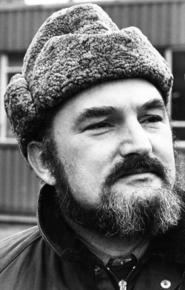
In 1967 Brien was snapped up by Harry Evans, The Sunday Times editor, who declared that his new recruit could get interesting copy from the fluff in his navel. He reported from abroad, reviewed films and wrote a diary. But the latter, which ran with a photograph of his bearded face, prompted Auberon Waugh to write a cruel parody in Private Eye (topped by his own face in a false beard) with regular references to "when I was in the RAFe_SLps " and conversations with Lord Beaverbrook, who had once sued Brien.
Like many journalists, Brien proved surprisingly sensitive when attacked, with the result that Waugh kept up his campaign; and long after Brien and his beard had vanished from The Sunday Times Waugh's column marched on.
After leaving the paper in 1984 Brien retired to Wales to write a long, well-researched novel, Lenin, which earned some respectable reviews. He also produced Domes of Fortune, a volume of essays in which he hymned the breasts of his third wife, the feminist journalist Jill Tweedie, for being the shape of Roman helmets.
She died in 1993, having affectionately written that he had none of the attributes of a mythic lover, being neither chivalrous nor very polite; he reminded her, she added, of an old warthog she had once seen in the African twilight.
Alan Brien suffered from poor health in later years, and died on May 23 at Denville Hall, the actors' home. He is survived by his fourth wife, Jane Hill, and by the four daughters and one son of his first two marriages.
Alan Brien, who has died aged 83, was a sparkling columnist sought after throughout Fleet Street in the 1950s, 1960s and the 1970s; like all pundits he was driven to exaggeration by the need to write something fresh, but in a couple of paragraphs he could cast a penetrating light on any subject, whether it was the pleasures of whisky, the pessimism of the Irish or Tudor building.
He was at various times film critic for the Evening Standard, television critic for The Observer, political pundit for the Sunday Pictorial and a trenchant denunciator on all subjects for the Daily Mail.
But his keenest interest was the theatre, which he covered for the Evening Standard, The Spectator and, most notably, The Sunday Telegraph from 1961 to 1967.
He described Michael Hordern's Macbeth as resembling "an Armenian carpet-seller who would not have been allowed into the back portcullis of Dunsinane".
Leo McKern's Volpone had "all the rubbery, tireless pugnacity of an overgrown toddler freaklishly endowed with grown-up glands and adult organs"; while Madge Ryan, in Entertaining Mr Sloane, was "a nymphomaniac Goldilockse parodying adult sexuality with many a roguish twinkle and a girlish skip, like a debauched Shirley Temple".
Brien pointed out that The Merchant of Venice was "a fairy tale with a plot as full of holes as a string bag" and groaned at the popularity of the "well-made" play, epitomised by Noël Coward's explorations of drawing-room embarrassments.
Yet while relishing such playwrights as Harold Pinter, Arnold Wesker and then Tom Stoppard, he recognised that "the Theatre of the Absurd is nowhere to go for a laugh".
The fifth son of a tramways inspector, Alan Brien was born on March 12 1925 and educated at Bede Grammer School, Sunderland, before going into the RAF to become a pilot. He then transferred to train as an air gunner before joining No 207 Squadron in June 1945. After going up to read English at Jesus College, Oxford, and staying on to edit Isis, Brien arrived in London with an influx of ambitious northerners determined to give assured Oxbridge figures a run for their money.
Soon he was was appearing in most well-known publications as well as on television, most notably when he chaired the discussion programme Three After Six. A gregarious character, given to frequenting all the journalists' favourite watering holes, he once had a fight with the Panorama reporter John Morgan at a Private Eye lunch over which of them was the more working-class.
In 1967 Brien was snapped up by Harry Evans, The Sunday Times editor, who declared that his new recruit could get interesting copy from the fluff in his navel. He reported from abroad, reviewed films and wrote a diary. But the latter, which ran with a photograph of his bearded face, prompted Auberon Waugh to write a cruel parody in Private Eye (topped by his own face in a false beard) with regular references to "when I was in the RAFe_SLps " and conversations with Lord Beaverbrook, who had once sued Brien.
Like many journalists, Brien proved surprisingly sensitive when attacked, with the result that Waugh kept up his campaign; and long after Brien and his beard had vanished from The Sunday Times Waugh's column marched on.
After leaving the paper in 1984 Brien retired to Wales to write a long, well-researched novel, Lenin, which earned some respectable reviews. He also produced Domes of Fortune, a volume of essays in which he hymned the breasts of his third wife, the feminist journalist Jill Tweedie, for being the shape of Roman helmets.
She died in 1993, having affectionately written that he had none of the attributes of a mythic lover, being neither chivalrous nor very polite; he reminded her, she added, of an old warthog she had once seen in the African twilight.
Alan Brien suffered from poor health in later years, and died on May 23 at Denville Hall, the actors' home. He is survived by his fourth wife, Jane Hill, and by the four daughters and one son of his first two marriages.
34 things every sociologist knows
Published 14 August 2006
Taken from the New Statesman archive, 1 May 1970.
How many of these might you hear today? Number 2 and number 12, certainly, and perhaps number 34, which like a few others at least ought to be true. Whatever the reality was in 1970, I wonder how many modern Hull bridegrooms have met their wives at public dances. Alan Brien, critic, columnist and wit, was a regular contributor to the magazine in the late 1960s and early 1970s.
Selected by Brian Cathcart
My sociologist friends complain that we laymen possess very little scientific information about our fellows, yet whenever we are faced with some elaborately researched generalisation about human behaviour we sneer and say: "But everybody knows that!" In order to muddy the waters of controversy, I have constructed a list of apparent truisms. I do not vouch for their accuracy, and reserve the right not to enter into correspondence with anyone about any of them.
1. The divorce rate is higher among the rich than the poor.
2. Men have a lower pain threshold than women.
3. No one has ever contracted lung cancer through smoking pot.
4. More soap is used per head per year in the north of England than in the south.
5. More men commit suicide than women but more women attempt suicide than men.
6. As 5, with the addition of the phrases "except in the north", "before 1945", "of childbearing age", and "collected from a random sample taken from readers of the Guardian woman's page".
7. London bus conductors have the lowest rate of heart disease of any British manual workers.
8. London bus drivers have the highest incidence of ulcers of any British socio-economic group.
9. The sales of tinned food to housewives are significantly lower in Wales than in the Home Counties.
10. Most serious accidents in the home in Scotland occur when the male wage-earner falls downstairs on a Saturday night.
11. The likelihood of any Member of Parliament bearing the same surname as any other MP is six times greater than the same likelihood among any group of the same number.
12. Most criminals are the product of broken homes.
13. 67 per cent of all London taxi drivers are Jewish.
14. The average annual income of authors in Britain who have published more than one book is £178.
15. More sexual offences are committed on the night of the full moon than on any other night in the lunar month.
16. At the 1966 general election, 27,264,747 votes were polled out of a UK electorate of 35,957,245.
17. The Daily Mail has had seven editors since the last war.
18. This is the same as the Spectator over the same period.
19. The chances of any cheque being marked "return to drawer" increase with the number of hyphens in the name of the signatory.
20. On a test measuring group attitudes, Hong Kong Chinese showed most hostility to Japanese and Asiatic Indians and least to Americans.
21. Married couples are more likely to share any physical characteristic - colour of eyes, hair, skin; height, weight, blood group - than not.
22. Criminal statistics show that in Britain the characteristic crime of the Irish is drunkenness, of the Scots violent assault, of the Jews fraud, and of the Welsh petty larceny.
23. That of the English is cruelty to children.
24. The amount of tax relief allowed to owner-occupiers in 1969-70 was £215m.
25. Britain has one acre of woodland to every 13 people.
26. There are 19 Briens in the London telephone directory.
27. Only 7 per cent of all people murdered in the UK in the past 25 years were killed by someone who was a total stranger to them.
28. The drop-out rate among students is highest among those from large families and lowest among those who are an only child.
29. The majority of motorists prosecuted for motoring offences have criminal records.
30. One bridegroom in four in Hull met his wife at a public dance.
31. Three married couples out of four in southern England were born, or brought up, within half a mile of each other.
32. Mental illness decreases in time of war.
33. There is a small, but distinct, tendency to bronchial ailments to be found among middle-aged people who have owned a dog for more than five years.
34. No long-term increase in the sales of any goods has ever been proved to result from an increase in advertising expenditure.
Taken from the New Statesman archive, 1 May 1970.
How many of these might you hear today? Number 2 and number 12, certainly, and perhaps number 34, which like a few others at least ought to be true. Whatever the reality was in 1970, I wonder how many modern Hull bridegrooms have met their wives at public dances. Alan Brien, critic, columnist and wit, was a regular contributor to the magazine in the late 1960s and early 1970s.
Selected by Brian Cathcart
My sociologist friends complain that we laymen possess very little scientific information about our fellows, yet whenever we are faced with some elaborately researched generalisation about human behaviour we sneer and say: "But everybody knows that!" In order to muddy the waters of controversy, I have constructed a list of apparent truisms. I do not vouch for their accuracy, and reserve the right not to enter into correspondence with anyone about any of them.
1. The divorce rate is higher among the rich than the poor.
2. Men have a lower pain threshold than women.
3. No one has ever contracted lung cancer through smoking pot.
4. More soap is used per head per year in the north of England than in the south.
5. More men commit suicide than women but more women attempt suicide than men.
6. As 5, with the addition of the phrases "except in the north", "before 1945", "of childbearing age", and "collected from a random sample taken from readers of the Guardian woman's page".
7. London bus conductors have the lowest rate of heart disease of any British manual workers.
8. London bus drivers have the highest incidence of ulcers of any British socio-economic group.
9. The sales of tinned food to housewives are significantly lower in Wales than in the Home Counties.
10. Most serious accidents in the home in Scotland occur when the male wage-earner falls downstairs on a Saturday night.
11. The likelihood of any Member of Parliament bearing the same surname as any other MP is six times greater than the same likelihood among any group of the same number.
12. Most criminals are the product of broken homes.
13. 67 per cent of all London taxi drivers are Jewish.
14. The average annual income of authors in Britain who have published more than one book is £178.
15. More sexual offences are committed on the night of the full moon than on any other night in the lunar month.
16. At the 1966 general election, 27,264,747 votes were polled out of a UK electorate of 35,957,245.
17. The Daily Mail has had seven editors since the last war.
18. This is the same as the Spectator over the same period.
19. The chances of any cheque being marked "return to drawer" increase with the number of hyphens in the name of the signatory.
20. On a test measuring group attitudes, Hong Kong Chinese showed most hostility to Japanese and Asiatic Indians and least to Americans.
21. Married couples are more likely to share any physical characteristic - colour of eyes, hair, skin; height, weight, blood group - than not.
22. Criminal statistics show that in Britain the characteristic crime of the Irish is drunkenness, of the Scots violent assault, of the Jews fraud, and of the Welsh petty larceny.
23. That of the English is cruelty to children.
24. The amount of tax relief allowed to owner-occupiers in 1969-70 was £215m.
25. Britain has one acre of woodland to every 13 people.
26. There are 19 Briens in the London telephone directory.
27. Only 7 per cent of all people murdered in the UK in the past 25 years were killed by someone who was a total stranger to them.
28. The drop-out rate among students is highest among those from large families and lowest among those who are an only child.
29. The majority of motorists prosecuted for motoring offences have criminal records.
30. One bridegroom in four in Hull met his wife at a public dance.
31. Three married couples out of four in southern England were born, or brought up, within half a mile of each other.
32. Mental illness decreases in time of war.
33. There is a small, but distinct, tendency to bronchial ailments to be found among middle-aged people who have owned a dog for more than five years.
34. No long-term increase in the sales of any goods has ever been proved to result from an increase in advertising expenditure.
Thursday, 3 July 2008

"The Anatomy of a Bore"
A first response to the Quote...Unquote Newsletter from John O'Byrne in Dublin. Forwarded by Nigel Rees.
'Interested to read your piece on Alan Brien. I had no idea he had died - I must have been away on my travels and missed the papers. By sheer coincidence, last night I was reading a 1958 piece by him (a review of The Birthday Party) reprinted in the recent Spectator 180th special anniversary annual. He wrote: "The Birthday Party is like a vintage Hitchcock thriller that has been, in the immortal, tear-stained words of Orson Welles, 'edited by a cross-eyed studio janitor with a lawn-mower'.
Also on my shelf is a great piece, "The Anatomy of a Bore", he wrote for the same magazine in 1963, where he identified the people he least wanted to sit down next to at dinner. He wrote: "The most boring thing about the bore is not just that he is boring, but that he makes you boring too. You can smell him out in any group by tuning into your own conversation."
A great writer - will be missed.'
'Interested to read your piece on Alan Brien. I had no idea he had died - I must have been away on my travels and missed the papers. By sheer coincidence, last night I was reading a 1958 piece by him (a review of The Birthday Party) reprinted in the recent Spectator 180th special anniversary annual. He wrote: "The Birthday Party is like a vintage Hitchcock thriller that has been, in the immortal, tear-stained words of Orson Welles, 'edited by a cross-eyed studio janitor with a lawn-mower'.
Also on my shelf is a great piece, "The Anatomy of a Bore", he wrote for the same magazine in 1963, where he identified the people he least wanted to sit down next to at dinner. He wrote: "The most boring thing about the bore is not just that he is boring, but that he makes you boring too. You can smell him out in any group by tuning into your own conversation."
A great writer - will be missed.'
Monday, 30 June 2008
Miles & Me by Jonathan Sale
'He could, from time to time, also be enormously touchy and grumpy: as our contributor Alan Brien remarked, he was a manic-depressive without the manic bit.'
For more than two decades, Miles Kington's daily musings on culture, politics and modern life were cherished by readers of The Independent. His death this week robs Britain of one its most original humorists. Here, friends reflect on the man they loved, while over the page are extracts from some of his finest columns
Friday, 1 February 2008 The Independent
Laughing all the way: Miles Kington pictured in 2006 © Geraint Lewis
There was only one occasion when my father, a retiring Cambridge academic, actually picked up the phone and dialled my number to congratulate me. It was after he'd read a piece I had written for Punch magazine – in collaboration with Miles Kington. The idea for the feature had been mine – "A history of demolition", prompted by the fact that half of London was being demolished to make way for the building boom of the early Seventies – but the fine touches, needless to say, had all belonged to Miles.
When we were preparing that article, some of the bits of work that we threw out for reasons of space were more imaginative than the efforts that other contributors to Punch would come up with in an entire year. "A history of demolition" was our only joint byline in my 17 years on the magazine, and by far the best thing I ever put my name to. On other weeks, it would have been me who phoned my old man.
Many people are so-called humorous journalists. Give us (or, to be precise, give me) a sandwich board inscribed "The End Of The World Is At Hand" and we (I) can turn out a jolly 1,500 words about what Japanese tourists said to us as we strapped it on and paraded up and down Oxford Street. Miles, however, was that rarity, a real humorist. He wouldn't have had to do that stunt – because he would have been able to come up with something far, far better.
Other journalists might write about sex. Miles wrote a wonderful spread on "How To Write a Sex Manual", which was illustrated with explicit photographs of the author engaged in foreplay with a typewriter and stroking the keyboard in a post-coital sort of way.
As a literary editor and writer, Miles was the best of colleagues and the worst of colleagues. He was my closest friend, and biggest pain in the neck. He was senior enough to "OK" my ideas, and junior enough for me not to be in trouble when I admitted that I had boobed. We were the only cyclists at Punch, in an office where the other blokes were always making pretentious remarks about their over-the-top motors.
He could, from time to time, also be enormously touchy and grumpy: as our contributor Alan Brien remarked, he was a manic-depressive without the manic bit. He could be pointlessly rude, but democratically so: he would be offhand to someone in the post-room (which was not admirable) and to the editor (which was foolhardy). He could mooch off early, leaving the rest of us to drown in a flood of page proofs.
One editor wanted to have him locked up. This was allegedly so that Miles could write an article about a night in the cells. More seriously, the same editor, Bill Davis, finally had enough and asked the rest of us if Miles was worth his keep. I protested that he was worth his weight in new typewriter ribbons (a judgement I later began to revise somewhat) and was pleased when no more was said about throwing the book at the then literary editor.
The feeling between editor and employee was clearly mutual. After a Punch works outing, in which as usual the drink had flowed even faster than the bons mots, a loud crashing was heard from the editor's office. This turned out to be Miles, expressing his feelings towards that editor by kicking hell out of his desk. He clearly felt better about getting this off his chest, and boot, and we put the desk together again – and expressed elaborate surprise when bits fell off it during the next editorial meeting.
My patience was tested after the next Punch works outing, when again the drinks flowed like printer's ink. Afterwards, Miles retired to the editor's office and yelled: "Hey, do you remember when I kicked the desk in?" In case I'd forgotten, he proceeded to wallop it again. I was reassembling the unoffending piece of furniture when Lord Barnetson, the chairman of the entire newspaper group, wandered in to see who was trashing his premises. I persuaded him that desks often fell to bits, thanks to shoddy modern manufacturing techniques.
"Kington works hard at his eccentricity," wrote Michael Parkinson in a piece about passing the Kingtons' flat while on the top deck of a bus and seeing Miles dreamily playing his double bass while his children ran round him and other people got ready to go to work. (This was back in the days when Kington rented a flat in Notting Hill and Parkinson travelled on buses.) Maybe there was an element of artifice in his demeanour; but certainly Kington cared less than most about appearances – his own appearance, anyway.
Tidying my office in a burst of keenness during my first month, I burrowed down through archaeological layers of dusty correspondence to long-gone members of staff. Round about the Pleistocene age, I discovered a pair of trousers. "Ah," said Miles, "I wondered what had happened to them." They were probably his best pair. He tended to wear old jeans, as he went everywhere on an old sit-up-and-beg bicycle, stopping occasionally to pull The Times out of the basket and fill in a crossword clue.
He dressed, said a cartoonist, as if someone had given him a 20-quid Millets voucher. Yet he always seemed more elegant and handsome, in a raffish sort of way, than anyone else. You would never have guessed it, but there seemed to be money in the background. While the rest of the staff were scraping around for mortgages, he quietly mentioned that he would buy his house outright. But in his family in general, he saw himself as being of the church mouse persuasion; there was or had been a castle somewhere in the family tree but it had gone to another branch.
When Alan Coren, the new editor, took over, Miles would have expected to move up to become deputy editor, but maybe his CV – the desk-bashing etc – stood in his way. Alan announced nervously that there would not be a deputy editor as such. In fact there was, but it wasn't Miles. This may have been the safe decision but it didn't please Miles, then literary editor, who became somewhat less reliable. During one of his unexplained absences from the office, Coren was forced to ring around various BBC recording studios to see if anyone had seen him playing there with his band, Instant Sunshine.
Miles always said that he didn't realise he had been sacked. He left when he was asked to present a programme about a train journey in the Andes. This involved, clearly, going to the Andes, which would make it hard to pull his weight around the office for a while. He asked if Coren minded. Coren didn't mind at all, but said that he would have to hire another literary editor to fill the enormous gap left by Miles, as indeed he did. That was much nicer than saying: "On your bike."
For more than two decades, Miles Kington's daily musings on culture, politics and modern life were cherished by readers of The Independent. His death this week robs Britain of one its most original humorists. Here, friends reflect on the man they loved, while over the page are extracts from some of his finest columns
Friday, 1 February 2008 The Independent
Laughing all the way: Miles Kington pictured in 2006 © Geraint Lewis
There was only one occasion when my father, a retiring Cambridge academic, actually picked up the phone and dialled my number to congratulate me. It was after he'd read a piece I had written for Punch magazine – in collaboration with Miles Kington. The idea for the feature had been mine – "A history of demolition", prompted by the fact that half of London was being demolished to make way for the building boom of the early Seventies – but the fine touches, needless to say, had all belonged to Miles.
When we were preparing that article, some of the bits of work that we threw out for reasons of space were more imaginative than the efforts that other contributors to Punch would come up with in an entire year. "A history of demolition" was our only joint byline in my 17 years on the magazine, and by far the best thing I ever put my name to. On other weeks, it would have been me who phoned my old man.
Many people are so-called humorous journalists. Give us (or, to be precise, give me) a sandwich board inscribed "The End Of The World Is At Hand" and we (I) can turn out a jolly 1,500 words about what Japanese tourists said to us as we strapped it on and paraded up and down Oxford Street. Miles, however, was that rarity, a real humorist. He wouldn't have had to do that stunt – because he would have been able to come up with something far, far better.
Other journalists might write about sex. Miles wrote a wonderful spread on "How To Write a Sex Manual", which was illustrated with explicit photographs of the author engaged in foreplay with a typewriter and stroking the keyboard in a post-coital sort of way.
As a literary editor and writer, Miles was the best of colleagues and the worst of colleagues. He was my closest friend, and biggest pain in the neck. He was senior enough to "OK" my ideas, and junior enough for me not to be in trouble when I admitted that I had boobed. We were the only cyclists at Punch, in an office where the other blokes were always making pretentious remarks about their over-the-top motors.
He could, from time to time, also be enormously touchy and grumpy: as our contributor Alan Brien remarked, he was a manic-depressive without the manic bit. He could be pointlessly rude, but democratically so: he would be offhand to someone in the post-room (which was not admirable) and to the editor (which was foolhardy). He could mooch off early, leaving the rest of us to drown in a flood of page proofs.
One editor wanted to have him locked up. This was allegedly so that Miles could write an article about a night in the cells. More seriously, the same editor, Bill Davis, finally had enough and asked the rest of us if Miles was worth his keep. I protested that he was worth his weight in new typewriter ribbons (a judgement I later began to revise somewhat) and was pleased when no more was said about throwing the book at the then literary editor.
The feeling between editor and employee was clearly mutual. After a Punch works outing, in which as usual the drink had flowed even faster than the bons mots, a loud crashing was heard from the editor's office. This turned out to be Miles, expressing his feelings towards that editor by kicking hell out of his desk. He clearly felt better about getting this off his chest, and boot, and we put the desk together again – and expressed elaborate surprise when bits fell off it during the next editorial meeting.
My patience was tested after the next Punch works outing, when again the drinks flowed like printer's ink. Afterwards, Miles retired to the editor's office and yelled: "Hey, do you remember when I kicked the desk in?" In case I'd forgotten, he proceeded to wallop it again. I was reassembling the unoffending piece of furniture when Lord Barnetson, the chairman of the entire newspaper group, wandered in to see who was trashing his premises. I persuaded him that desks often fell to bits, thanks to shoddy modern manufacturing techniques.
"Kington works hard at his eccentricity," wrote Michael Parkinson in a piece about passing the Kingtons' flat while on the top deck of a bus and seeing Miles dreamily playing his double bass while his children ran round him and other people got ready to go to work. (This was back in the days when Kington rented a flat in Notting Hill and Parkinson travelled on buses.) Maybe there was an element of artifice in his demeanour; but certainly Kington cared less than most about appearances – his own appearance, anyway.
Tidying my office in a burst of keenness during my first month, I burrowed down through archaeological layers of dusty correspondence to long-gone members of staff. Round about the Pleistocene age, I discovered a pair of trousers. "Ah," said Miles, "I wondered what had happened to them." They were probably his best pair. He tended to wear old jeans, as he went everywhere on an old sit-up-and-beg bicycle, stopping occasionally to pull The Times out of the basket and fill in a crossword clue.
He dressed, said a cartoonist, as if someone had given him a 20-quid Millets voucher. Yet he always seemed more elegant and handsome, in a raffish sort of way, than anyone else. You would never have guessed it, but there seemed to be money in the background. While the rest of the staff were scraping around for mortgages, he quietly mentioned that he would buy his house outright. But in his family in general, he saw himself as being of the church mouse persuasion; there was or had been a castle somewhere in the family tree but it had gone to another branch.
When Alan Coren, the new editor, took over, Miles would have expected to move up to become deputy editor, but maybe his CV – the desk-bashing etc – stood in his way. Alan announced nervously that there would not be a deputy editor as such. In fact there was, but it wasn't Miles. This may have been the safe decision but it didn't please Miles, then literary editor, who became somewhat less reliable. During one of his unexplained absences from the office, Coren was forced to ring around various BBC recording studios to see if anyone had seen him playing there with his band, Instant Sunshine.
Miles always said that he didn't realise he had been sacked. He left when he was asked to present a programme about a train journey in the Andes. This involved, clearly, going to the Andes, which would make it hard to pull his weight around the office for a while. He asked if Coren minded. Coren didn't mind at all, but said that he would have to hire another literary editor to fill the enormous gap left by Miles, as indeed he did. That was much nicer than saying: "On your bike."
Posy Simmonds
Posy was shipwrecked on Desert Island Discs, yesterday, Sunday 29th June 2008 (repeated this coming Friday). Posy lodged with Jill before either of them worked on The Guardian and part of the arrangement was that she collect Luke from nursery school.
Posy went to the Central School for Art and Design and the Sunday Times cartoonist Mel Calman, who spotted her work at her degree show, introduced her to Jill.
One of Posy's strips caricatured Alan. Jane Andromache knows which one.
See NPG 6247 Women's Page Contributors to The Guardian by Sarah Raphael. oil on paper laid on board, 1994. The sitters are:
Dame Elizabeth Anne Lucy Forgan Show (1944-), Journalist and media director.
Posy Simmonds Show (1945-), Cartoonist.
Mary Stott Show (1907-2002), Journalist.
Polly Toynbee Show (1946-), Journalist.
Jill Sheila Tweedie Show (1936-1993), Journalist.
Posy went to the Central School for Art and Design and the Sunday Times cartoonist Mel Calman, who spotted her work at her degree show, introduced her to Jill.
One of Posy's strips caricatured Alan. Jane Andromache knows which one.
See NPG 6247 Women's Page Contributors to The Guardian by Sarah Raphael. oil on paper laid on board, 1994. The sitters are:
Dame Elizabeth Anne Lucy Forgan Show (1944-), Journalist and media director.
Posy Simmonds Show (1945-), Cartoonist.
Mary Stott Show (1907-2002), Journalist.
Polly Toynbee Show (1946-), Journalist.
Jill Sheila Tweedie Show (1936-1993), Journalist.
Subscribe to:
Posts (Atom)