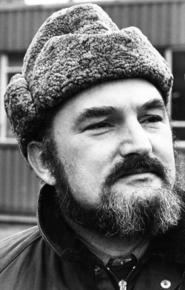
ADVENTURES OF A LANGUAGE TRAVELLER
An autobiography
JOHN HAYCRAFT
Edited by Michael Woosnam-Mills
Constable • London
1998
Fabled City
Our first speaker was Doctor Joad, reserved as ever except on the platform. We
organised fund-raising dances and a debate between the economist Graham Hutton
and the historian AJP Taylor. I got a lead article on world government into Isis
and a short story I had written in India into Viewpoint magazine. Being published
at Oxford was a triumph. Everyone felt Oxford and Cambridge were cradles for
success, particularly at this time when undergraduates were older, eager to fill
the vacuum left by the war. It was an amazingly élitist group. Among those I met
at Oxford between 1948 and 1951 were Robert Runcie, journalists John Ardagh,
Alan Brien, William Rees-Mogg, Anthony Sampson, Godfrey Smith and Ken
Tynan, politicians Tony Benn, Margaret Thatcher, Jeremy Thorpe and Shirley
Williams, the poet Philip Larkin, novelists Kingsley Amis, Nina Bawden, Sue
Chitty, Thomas Hinde and my cousin Francis King, the critic Martin Seymour-
Smith, John Schlesinger, William Russell, Michael Codron, Alan Cooke, Charles
Hodgson, Michael Croft, Tony Richardson, Peter Parker, Robin Day, Robert
Robinson and Magnus Magnusson. Government grants for those who had done
national service meant there were more non-public-school students. Of 250 Jesus
College undergraduates, only five came from public schools.
It was a fantasy world, perhaps because undergraduates were consciously
making the most of this euphoric period between the circumscriptions of school
and the forces, and the exigencies of a career. One morning Rodney, Rebecca,
Janet and I were walking in the Corn, when Rodney suddenly exclaimed, 'It's as
sunny as a wedding day! Let's get married!' We bought cakes and wine and told
the registration office clerk we wanted to get married at once. I'm sure we would
have gone through with it, but the clerk talked firmly about identity papers and
giving notice. 'It seems unfair people can't get married when they want!'
objected Rodney. The clerk took this seriously and suggested Rodney put it in
writing. We
[p115]
Friday, 13 June 2008


books on Book 'em
Alan Brien
Lenin the Novel
Corners slightly bumped. DJ has chipping on corners, edges & top & bottom of spine, but cover illustration intact.
William Morrow.
www.bookembooks.com/ap_alan_brien.html
Lenin the Novel
Corners slightly bumped. DJ has chipping on corners, edges & top & bottom of spine, but cover illustration intact.
William Morrow.
www.bookembooks.com/ap_alan_brien.html
In 1965 I suggested to Alan Brien...that he choose for discussion Mailer's first novel for 10 years, The American Dream.
Philip French
Latest blog posts
A life in film
Norman Mailer and me
My 10 favourite summer films
Show all articles
Philip French is the Observer's film critic.
All Philip French articles
About Webfeeds Norman Mailer and me
Over the years the American author had my BBC career on the line more than once
November 21, 2007 10:00 AM
The head of the Third Programme thought Norman Mailer's ideas were half-baked, even mad, but eventually became a fan.
The death of Norman Mailer brings back memories of three odd and related incidents at the BBC. As a newly arrived producer at Broadcasting House in 1961 I proposed that Norman Mailer be invited to discuss his new book Advertisements for Myself for the Third Programme (now Radio Three). It was accepted with a certain reluctance as Mailer, then on bail for the attempted murder of his wife, was out of favour. My chosen interviewer was another maverick social observer, Colin MacInnes - I thought the result splendid and so did they. I called the talk A Cruel Soil for Talent, which was Mailer's description of the prevailing cultural climate in the US, and sent a billing to the Radio Times. Then early one evening the head of the Third, PH Newby, the novelist and first winner of the Booker prize, phoned to say he'd heard the programme, thought Mailer's ideas about God, Satan, politics, existentialism and modern sexuality half-baked, even mad, and he'd withdrawn it from the schedules. When I suggested I wouldn't work for him again if it wasn't broadcast, he took the unprecedented step of arranging a playback for all Third Programme producers who'd then be asked to vote. Around 30 people attended, there was a vote and I won by a fairly decent margin. The programme went out (though it was cut by 10 minutes to show official disapproval) and the press reception was excellent. Newby became a Mailer fan, and I worked at the BBC for another 30 years.
In 1965 I suggested to Alan Brien (theatre critic and Spectator columnist), the then book reviewer on the Home Service's Sunday lunchtime programme, The Critics, that he choose for discussion Mailer's first novel for 10 years, The American Dream. Two days later he told me the producers had dropped the book because it featured anal sex. So he'd resigned and was taking the story to Fleet Street. Some minutes later I had a call from the assistant head of radio publicity to say that, to refute Brien's claim, the BBC was putting out a press release saying The American Dream had been withdrawn from The Critics to avoid duplication with my Third Programme magazine, New Comment. I immediately phoned my boss, the legendary radio pioneer and friend of Ezra Pound, DG Bridson. "Geoffrey," I said, "I've just had a call from a stupid bitch in publicity called Joyce Rowe and they're going to put out a lying statement that will make us all look like fucking idiots." There was a pause. Bridson said: "Joyce Rowe is my wife." In his 1971 memoir Prospero and Ariel, Bridson wrote of this affair: "I was intrigued to find myself pilloried as another Pastor Manders. But though I have no objection to sodomitical practices (among consenting adults) I still think they might have proved unacceptable to the old ladies of Cheltenham if the book had been recommended to them over lunch one Sunday morning."
Three years later, in 1968, the novelist and historian David Caute was invited to review Mailer's Armies of the Night, his book on the anti-war march in Washington, for the Third Programme. In the course of the talk he quoted from another Mailer book, the novel Why Are We In Vietnam?, a long, scatological monologue on the theme of machismo. A couple of days before transmission the head of the talks department saw the script and demanded that the quotation be cut and the talk rerecorded. Caute refused and the talk was withdrawn. The novelist and playwright Julian Mitchell, a friend of Caute's, got up a letter of protest to the Listener, the BBC's prestigious weekly journal (it was closed down in 1989 for reasons of economy) signed by a couple of dozen writers, John Updike and Angus Wilson among them.
The following year I launched a new programme, The Arts This Week, to go out live on the Third Programme every Wednesday evening. My co-producer was Russell Harty and the programme was presented by Bryan Magee, the philosopher, broadcaster and future MP. One of the items for discussion was Why Are We In Vietnam? and the speakers were Eric Mottram, lecturer in American literature at London University, and Julian Mitchell. In retrospect I'm not sure just what we expected, but a few minutes into the discussion, Mitchell said something to the effect that it was impossible to get a sense of the book's tone without quoting from it, and after telling listeners that they had 20 seconds to get over to their radio sets and switch off, he quoted a passage from the book that contained more than half-a-dozen four letter words.
I don't recall how many people phoned in to complain - not many, I think. I do remember that immediately after the programme ended Howard Newby, still head of the Third Programme, called the studio to say how much he'd liked it, and there were a number of calls from people who'd enjoyed it. The following morning the weekly Third Programme talks meeting began with a brief review of the previous seven days' broadcasting. But before the discussion got going, George Camacho, the head of talks and previously the controller of the Light Programme (the future Radios 1 and 2), said to Howard Newby, who was in the chair: "I think we've got something to discuss". "What's that George?" said Newby. "I think you know perfectly well," said Camacho. "We'd banned Caute six months ago, and this is going to make us appear to say the least a little inconsistent." "But George," said Newby, with quiet reasonableness, "'Caute was quoting a book that hadn't yet been published. Last night's discussion was specifically centred on the published book. It's a very different situation."
Such Jesuitical argumentation was very characteristic of the BBC at the time. Camacho's response was what is usually conveyed in print by 'hrummffph', and the meeting went on to other business. In the early 1970s, in an article in the quarterly magazine Encounter on changing tastes and values in broadcasting, Camacho vigorously defended his decision. I had gone into the meeting wondering if my career was on the line again, but The Arts This Week went out live for another 97 editions.
Comments
Latest blog posts
A life in film
Norman Mailer and me
My 10 favourite summer films
Show all articles
Philip French is the Observer's film critic.
All Philip French articles
About Webfeeds Norman Mailer and me
Over the years the American author had my BBC career on the line more than once
November 21, 2007 10:00 AM
The head of the Third Programme thought Norman Mailer's ideas were half-baked, even mad, but eventually became a fan.
The death of Norman Mailer brings back memories of three odd and related incidents at the BBC. As a newly arrived producer at Broadcasting House in 1961 I proposed that Norman Mailer be invited to discuss his new book Advertisements for Myself for the Third Programme (now Radio Three). It was accepted with a certain reluctance as Mailer, then on bail for the attempted murder of his wife, was out of favour. My chosen interviewer was another maverick social observer, Colin MacInnes - I thought the result splendid and so did they. I called the talk A Cruel Soil for Talent, which was Mailer's description of the prevailing cultural climate in the US, and sent a billing to the Radio Times. Then early one evening the head of the Third, PH Newby, the novelist and first winner of the Booker prize, phoned to say he'd heard the programme, thought Mailer's ideas about God, Satan, politics, existentialism and modern sexuality half-baked, even mad, and he'd withdrawn it from the schedules. When I suggested I wouldn't work for him again if it wasn't broadcast, he took the unprecedented step of arranging a playback for all Third Programme producers who'd then be asked to vote. Around 30 people attended, there was a vote and I won by a fairly decent margin. The programme went out (though it was cut by 10 minutes to show official disapproval) and the press reception was excellent. Newby became a Mailer fan, and I worked at the BBC for another 30 years.
In 1965 I suggested to Alan Brien (theatre critic and Spectator columnist), the then book reviewer on the Home Service's Sunday lunchtime programme, The Critics, that he choose for discussion Mailer's first novel for 10 years, The American Dream. Two days later he told me the producers had dropped the book because it featured anal sex. So he'd resigned and was taking the story to Fleet Street. Some minutes later I had a call from the assistant head of radio publicity to say that, to refute Brien's claim, the BBC was putting out a press release saying The American Dream had been withdrawn from The Critics to avoid duplication with my Third Programme magazine, New Comment. I immediately phoned my boss, the legendary radio pioneer and friend of Ezra Pound, DG Bridson. "Geoffrey," I said, "I've just had a call from a stupid bitch in publicity called Joyce Rowe and they're going to put out a lying statement that will make us all look like fucking idiots." There was a pause. Bridson said: "Joyce Rowe is my wife." In his 1971 memoir Prospero and Ariel, Bridson wrote of this affair: "I was intrigued to find myself pilloried as another Pastor Manders. But though I have no objection to sodomitical practices (among consenting adults) I still think they might have proved unacceptable to the old ladies of Cheltenham if the book had been recommended to them over lunch one Sunday morning."
Three years later, in 1968, the novelist and historian David Caute was invited to review Mailer's Armies of the Night, his book on the anti-war march in Washington, for the Third Programme. In the course of the talk he quoted from another Mailer book, the novel Why Are We In Vietnam?, a long, scatological monologue on the theme of machismo. A couple of days before transmission the head of the talks department saw the script and demanded that the quotation be cut and the talk rerecorded. Caute refused and the talk was withdrawn. The novelist and playwright Julian Mitchell, a friend of Caute's, got up a letter of protest to the Listener, the BBC's prestigious weekly journal (it was closed down in 1989 for reasons of economy) signed by a couple of dozen writers, John Updike and Angus Wilson among them.
The following year I launched a new programme, The Arts This Week, to go out live on the Third Programme every Wednesday evening. My co-producer was Russell Harty and the programme was presented by Bryan Magee, the philosopher, broadcaster and future MP. One of the items for discussion was Why Are We In Vietnam? and the speakers were Eric Mottram, lecturer in American literature at London University, and Julian Mitchell. In retrospect I'm not sure just what we expected, but a few minutes into the discussion, Mitchell said something to the effect that it was impossible to get a sense of the book's tone without quoting from it, and after telling listeners that they had 20 seconds to get over to their radio sets and switch off, he quoted a passage from the book that contained more than half-a-dozen four letter words.
I don't recall how many people phoned in to complain - not many, I think. I do remember that immediately after the programme ended Howard Newby, still head of the Third Programme, called the studio to say how much he'd liked it, and there were a number of calls from people who'd enjoyed it. The following morning the weekly Third Programme talks meeting began with a brief review of the previous seven days' broadcasting. But before the discussion got going, George Camacho, the head of talks and previously the controller of the Light Programme (the future Radios 1 and 2), said to Howard Newby, who was in the chair: "I think we've got something to discuss". "What's that George?" said Newby. "I think you know perfectly well," said Camacho. "We'd banned Caute six months ago, and this is going to make us appear to say the least a little inconsistent." "But George," said Newby, with quiet reasonableness, "'Caute was quoting a book that hadn't yet been published. Last night's discussion was specifically centred on the published book. It's a very different situation."
Such Jesuitical argumentation was very characteristic of the BBC at the time. Camacho's response was what is usually conveyed in print by 'hrummffph', and the meeting went on to other business. In the early 1970s, in an article in the quarterly magazine Encounter on changing tastes and values in broadcasting, Camacho vigorously defended his decision. I had gone into the meeting wondering if my career was on the line again, but The Arts This Week went out live for another 97 editions.
Comments
Selective Memory...her column on the Spectator because she bumped into one of its stalwarts, Alan Brien, at a party.
The original Bridget Jones
Joan Bakewell revels in Selective Memory, a delightfully self-effacing memoir from frontline feminist Katharine Whitehorn
Joan Bakewell
Saturday October 6, 2007
Guardian
Selective Memory
by Katharine Whitehorn
320pp, Virago, £18.99
It is the aspirin in the suspender I recall most vividly. Along with black ink to disguise laddered stockings, it featured as a slut's remedy in a landmark 1963 Observer article in which Katharine Whitehorn led the charge for women journalists to write as themselves rather than as pale shadows of the men who dominated the field. And here she is setting out how that battle was fought and well-nigh won, long before the shock troops of Germaine Greer and co came surging up with their heavy reinforcements. In her autobiography, her light wit is as delightful as ever, her honesty as unflinching.
Katharine Whitehorn was no "child of the 60s", and that giddy, glamorous era overshadows the decade that went before it, which is often characterised as grim and monotonous. It was no such thing. Rather, it was full of the excitement of positive change. "We had the heady sense that everything was getting better," recalls Whitehorn of the 1950s, and she was where the fun was to be had - in the journalism of the time. She arrived full of confidence and good sense, from an enlightened, left-leaning background. Father was a housemaster at Mill Hill School, later at Marlborough, mother came from a family of Christian socialists, and there was a grandfather who was a founder of both the Peace Pledge Union and the Marriage Guidance Council. She would go on to marry a Quaker novelist and send her sons to Westminster School. Good middle-class professionals all.
But her childhood had not been easy: father dubbed her "pudding", she was bullied at school and ran away from Roedean, showing spirit in the face of rigid and unfeeling treatment. Her self-reliance was remarkable at a time when women were mostly being schooled for home and children. She hitchhiked alone for two months around Europe, took a British Council job in Finland, and drove across America with one of a series of smitten boyfriends. She makes it all sound languidly easy, but only someone of her determination and staying power could have done so much. She would eventually be one of the first and most distinguished of women columnists, writing for the Observer for 30 years.
Her first job was on Home Notes, a trite little publication where she subbed real-life love stories. But it put her into the swim of Fleet Street activity and friendships. Picture Post's legendary photographer Bert Hardy used her as a model for a feature called "Lonely in London", sitting before a gas fire surrounded by milk bottles and drying laundry. The photograph found its way into the Hulton library and was used everywhere. It also got her a job as a cub reporter on Picture Post, where she went out an assignments with photographers, honing her skills writing their captions.
As she tells it, the opportunities came out of sheer luck: Home Notes because she just happened to be in the office when the job came up; covering the Paris fashion collections for Picture Post because an editor had run off with the only other girl on the paper; her column on the Spectator because she bumped into one of its stalwarts, Alan Brien, at a party. It all sounds a bit too light-hearted and Bridget Jones. The record speaks for something more resolute: a lifetime's dedication to a craft of which she became master - the sly, informative, witty and important personal column.
An agenda soon emerged. Her first column for the Observer was about Betty Friedan's The Feminine Mystique, one of the ur-texts of 1960s feminism. "I think my feminism must have been of a pre-war kind," she explains, as she praises a string of strong single women, while acknowledging that at the same time her desire to find the right man for herself. Cooking in a Bedsitter was her practical contribution to women's freedom. She wrote it in three-and-a-half months and it stayed in print for 40 years, sitting not only on my shelf but on Delia Smith's too. This was a time when there were few fridges and no supermarkets, when single girls lived with two gas rings and a saucepan, and 38% of women cooked (cooked!) three meals a day. A series of mini-books followed: How to Survive in Hospital ... in the Kitchen ... Children ... Money Problems. In her mature years she was, not surprisingly, asked to sit on company boards and became rector of the University of St Andrews, while supporting the International Women's Forum. Now, in her 70s, she is Saga magazine's agony aunt.
But Selective Memory is her personal story, too. She did marry the right man, and lived with and loved him for 45 years. Gavin Lyall was a thriller writer, who in later years battled alcoholism. She talks of it with her usual robust good humour, but the pain shows through. It's good that in writing this book she conjures up again their many happy days together, not least on their boat on the Thames, and she talks of her widowhood with a gentle melancholy. Those who knew and loved her columns will enjoy her company all over again, and newcomers will learn of a stalwart, serious feminism that predates the 1960s.
· Joan Bakewell's The View from Here: Life at Seventy is published by Guardian Books
guardian.co.uk © Guardian News and Media Limited 2008
Joan Bakewell revels in Selective Memory, a delightfully self-effacing memoir from frontline feminist Katharine Whitehorn
Joan Bakewell
Saturday October 6, 2007
Guardian
Selective Memory
by Katharine Whitehorn
320pp, Virago, £18.99
It is the aspirin in the suspender I recall most vividly. Along with black ink to disguise laddered stockings, it featured as a slut's remedy in a landmark 1963 Observer article in which Katharine Whitehorn led the charge for women journalists to write as themselves rather than as pale shadows of the men who dominated the field. And here she is setting out how that battle was fought and well-nigh won, long before the shock troops of Germaine Greer and co came surging up with their heavy reinforcements. In her autobiography, her light wit is as delightful as ever, her honesty as unflinching.
Katharine Whitehorn was no "child of the 60s", and that giddy, glamorous era overshadows the decade that went before it, which is often characterised as grim and monotonous. It was no such thing. Rather, it was full of the excitement of positive change. "We had the heady sense that everything was getting better," recalls Whitehorn of the 1950s, and she was where the fun was to be had - in the journalism of the time. She arrived full of confidence and good sense, from an enlightened, left-leaning background. Father was a housemaster at Mill Hill School, later at Marlborough, mother came from a family of Christian socialists, and there was a grandfather who was a founder of both the Peace Pledge Union and the Marriage Guidance Council. She would go on to marry a Quaker novelist and send her sons to Westminster School. Good middle-class professionals all.
But her childhood had not been easy: father dubbed her "pudding", she was bullied at school and ran away from Roedean, showing spirit in the face of rigid and unfeeling treatment. Her self-reliance was remarkable at a time when women were mostly being schooled for home and children. She hitchhiked alone for two months around Europe, took a British Council job in Finland, and drove across America with one of a series of smitten boyfriends. She makes it all sound languidly easy, but only someone of her determination and staying power could have done so much. She would eventually be one of the first and most distinguished of women columnists, writing for the Observer for 30 years.
Her first job was on Home Notes, a trite little publication where she subbed real-life love stories. But it put her into the swim of Fleet Street activity and friendships. Picture Post's legendary photographer Bert Hardy used her as a model for a feature called "Lonely in London", sitting before a gas fire surrounded by milk bottles and drying laundry. The photograph found its way into the Hulton library and was used everywhere. It also got her a job as a cub reporter on Picture Post, where she went out an assignments with photographers, honing her skills writing their captions.
As she tells it, the opportunities came out of sheer luck: Home Notes because she just happened to be in the office when the job came up; covering the Paris fashion collections for Picture Post because an editor had run off with the only other girl on the paper; her column on the Spectator because she bumped into one of its stalwarts, Alan Brien, at a party. It all sounds a bit too light-hearted and Bridget Jones. The record speaks for something more resolute: a lifetime's dedication to a craft of which she became master - the sly, informative, witty and important personal column.
An agenda soon emerged. Her first column for the Observer was about Betty Friedan's The Feminine Mystique, one of the ur-texts of 1960s feminism. "I think my feminism must have been of a pre-war kind," she explains, as she praises a string of strong single women, while acknowledging that at the same time her desire to find the right man for herself. Cooking in a Bedsitter was her practical contribution to women's freedom. She wrote it in three-and-a-half months and it stayed in print for 40 years, sitting not only on my shelf but on Delia Smith's too. This was a time when there were few fridges and no supermarkets, when single girls lived with two gas rings and a saucepan, and 38% of women cooked (cooked!) three meals a day. A series of mini-books followed: How to Survive in Hospital ... in the Kitchen ... Children ... Money Problems. In her mature years she was, not surprisingly, asked to sit on company boards and became rector of the University of St Andrews, while supporting the International Women's Forum. Now, in her 70s, she is Saga magazine's agony aunt.
But Selective Memory is her personal story, too. She did marry the right man, and lived with and loved him for 45 years. Gavin Lyall was a thriller writer, who in later years battled alcoholism. She talks of it with her usual robust good humour, but the pain shows through. It's good that in writing this book she conjures up again their many happy days together, not least on their boat on the Thames, and she talks of her widowhood with a gentle melancholy. Those who knew and loved her columns will enjoy her company all over again, and newcomers will learn of a stalwart, serious feminism that predates the 1960s.
· Joan Bakewell's The View from Here: Life at Seventy is published by Guardian Books
guardian.co.uk © Guardian News and Media Limited 2008
Mr Partridge … completely omits from his index “spirit” as a euphemism for “semen”. The twelve volume Oxford English Dictionary also fails to include
Sexual Symbolism, Religious Language, and the Ambiguity of the Spirit: Associative Themes in Anglican Poetry and Philosophy.
Abstract by Ralph Norman (Canterbury University)quoting from a piece Alan wrote in The Spectator, 17th April, 1964 - a review of Patridge's SHAKESPEARE'S BAWDY. (grateful thanks to Ralph Norman for providing a pre-editorial draft-version of his article.)
Unfortunately, one euphemism Partridge should have included with these is missing from the original list as published in the first (1947) and second (1955) editions of Shakespeare’s Bawdy. These early editions of Partridge’s book drew the following critical remarks from Alan Brien in The Spectator on the 17th April, 1964, pointing out the missing medical – and theological – euphemism:
Mr Partridge … completely omits from his index “spirit” as a euphemism for “semen”. The twelve volume Oxford English Dictionary also fails to include the meaning. Yet the evidence for claiming that it carried this extra sense in Elizabethan times (compare “spunk” today) is undeniable … I see that Leslie Fiedler, in a volume published in 1962, makes the same point. This gives edge and bite to the famous “The expense of spirit in a waste of shame Is lust in action”, especially if “waste” can also be read as “waist”.
And I have a clinching quotation to help Mr Fiedler along – in Bacon’s Sylva Sylvarum (1627), he writes, “It hath been observed by the ancients that much use of Venus doth dim the sight … The cause of dimness of sight is the expense of spirits.”
The reference to Shakespeare – ‘Th’ expense of spirit in a waste of shame’ – is, of course, to Sonnet 129, ll. 1-2; the reference to the critical scholarship – to Fiedler and his remarks on dirty puns and double entendre – is to The Riddle of Shakespeare’s Sonnets. To put his omission right, Partridge included an extract from Brien’s article – spelling Fiedler’s name (alas!) incorrectly – in the subsequent, third (1968) edition of his book. But in the quoted article from The Spectator, Brien had neglected to state that, before Fiedler, Patrick Cruttwell had already noted the connection of ‘spirit’ and ‘sperm’.
Abstract by Ralph Norman (Canterbury University)quoting from a piece Alan wrote in The Spectator, 17th April, 1964 - a review of Patridge's SHAKESPEARE'S BAWDY. (grateful thanks to Ralph Norman for providing a pre-editorial draft-version of his article.)
Unfortunately, one euphemism Partridge should have included with these is missing from the original list as published in the first (1947) and second (1955) editions of Shakespeare’s Bawdy. These early editions of Partridge’s book drew the following critical remarks from Alan Brien in The Spectator on the 17th April, 1964, pointing out the missing medical – and theological – euphemism:
Mr Partridge … completely omits from his index “spirit” as a euphemism for “semen”. The twelve volume Oxford English Dictionary also fails to include the meaning. Yet the evidence for claiming that it carried this extra sense in Elizabethan times (compare “spunk” today) is undeniable … I see that Leslie Fiedler, in a volume published in 1962, makes the same point. This gives edge and bite to the famous “The expense of spirit in a waste of shame Is lust in action”, especially if “waste” can also be read as “waist”.
And I have a clinching quotation to help Mr Fiedler along – in Bacon’s Sylva Sylvarum (1627), he writes, “It hath been observed by the ancients that much use of Venus doth dim the sight … The cause of dimness of sight is the expense of spirits.”
The reference to Shakespeare – ‘Th’ expense of spirit in a waste of shame’ – is, of course, to Sonnet 129, ll. 1-2; the reference to the critical scholarship – to Fiedler and his remarks on dirty puns and double entendre – is to The Riddle of Shakespeare’s Sonnets. To put his omission right, Partridge included an extract from Brien’s article – spelling Fiedler’s name (alas!) incorrectly – in the subsequent, third (1968) edition of his book. But in the quoted article from The Spectator, Brien had neglected to state that, before Fiedler, Patrick Cruttwell had already noted the connection of ‘spirit’ and ‘sperm’.
Lord Beaverbrook
Evelyn Waugh remarked of Beaverbrook, “Of course, I believe in the
Devil. How otherwise would I account for the existence of Lord Beaverbrook?”
Alan Brien, The Proprietor, in THE BEAVERBROOK I KNEW 178, 186
(Logan Gourlay ed., 1984).
Devil. How otherwise would I account for the existence of Lord Beaverbrook?”
Alan Brien, The Proprietor, in THE BEAVERBROOK I KNEW 178, 186
(Logan Gourlay ed., 1984).
Reprinted in The Gargoyle 2007
Born in 1925, Alan Brien is a novelist,
journalist and critic of distinction. Serving as
an air-gunner in the RAF in the War, he
enjoyed a long and successful career in Fleet
Street, writing variously for the Daily Mail,
the Sunday Dispatch, Sunday Pictorial,
Sunday Telegraph, Spectator, New Statesman,
Sunday Times, Evening Standard, Punch, as
well as being a regular broadcaster on radio
and television. In 1987, his novel on Lenin
was published. Now retired, Alan lives in
North London.
Bless My Soul
by Alan Brien
(“Sacred Cows”, Sunday Times Magazine, 3rd April 1977)
If there is any creature I find less
sympathetic than a sacred cow, it is the
sacred cowherd. And this, it seems to me, is
Malcolm Muggeridge’s true role.
Our sacred cows in the West, like living
goddesses of Nepal, are quite often more to be
pitied than resented. It can be very lonely, rather
tiring and frustrating, above all, being above all,
not much fun up there on the pedestal. Yon are
never allowed to be fallible, gullible, irritable or
wrong. But the cowherd, working on his
percentage, can always plead that he is only
human. He is just the front man for a mystery that
cannot be approached direct. So every guru has
his chila, every champ his manager, every star his
agent, every freak his barker, every gangster his
mouthpiece and the perennial aim of the power
behind the throne is to outlast the power behind
the throne. Our hero, MM, has survived in the
same way by herding many a sacred beast to the
sacrifice without singeing even much more than
his own eyebrows.
The voice is the voice of Malcolm, the
mug is the mug of the Mugg, but the message
must always be the message of the Lord. Now it is
the Lord God, but it has been the Lord Camrose,
also General-Secretary Joseph Stalin, also the
Manchester Guardian, also Mr Punch, also the
BBC. Malcolm Muggeridge is a cowherd for all
seasons – he must never be blamed personally for
where his sacred cow of the decade leaves its
sacred cow pats.
There is no problem charting
Muggeridge’s succession of causes. Indeed, he
has documented the primrose path in his own
volumes of autobiography. He likes to identify his
own part in life’s soap opera as increasingly that
of “a displaced person”. I would substitute instead
“a born defector”, or perhaps “the natural doubleagent”.
The difference is not always easy to detect
as Muggeridge, who also occasionally likes to
present himself as a sometime secret-service man,
has good reason to know.
The pattern, as I see it, is of an eloquent
advocate – a word spinner and jest-juggler
without peer among advertising copywriters –
who too easily becomes imprinted by the allembracing
gospel he is asked to preach, then
equally suddenly rejects the imprint, only to
emboss upon his psyche another monolithic creed.
After each failure the revulsion is dramatic,
permanent, possibly near hysterical.
For example, as a young man he wrote
leaders for the Manchester Guardian, full of
simple faith in progress, the classic doctrine of
liberalism. Even 40 years later he is still
denouncing that innocent idealism in terms of
manic hyperbole: “Liberalism [he wrote in 1965]
will be seen as the great destructive force of our
time: much more so than Communism, Fascism,
Nazism or any other lunatic creeds .... Compared
to the long-term consequences of Gilbert Murray,
Bertrand Russell and Mrs Eleanor Roosevelt,
Hitler was an ineffective dreamer, Stalin a Father
Christmas and Mussolini an Arcadian shepherd.”
He went to Moscow in the mid-1930’s,
anticipating the foundation of Utopia, and
prepared to sell up and settle there forever.
Disillusioned, he has never ceased denouncing
everyone on the Left, even those who never
shared his naive expectations, as dupes of the
Kremlin. After the war he wrote leaders for the
Telegraph as assistant editor, and it is the Tory
leaders he supported then he now places in the
pillory. He came to fame as a combative, critical
Editor of Punch – a magazine he has since rarely
missed an opportunity of denigrating. And he
finally established himself as a household image
on television, with his knobkerrie face and that
strangulated voice which, next to Edward Heath’s,
must be the most extraordinary and artificial of
any public man. Yet his favourite topic is a
denunciation of TV as a medium fit only for
hucksters and charlatans, guaranteed to process
reality into trivia.
For an intellectual of his repute, many of
his essays are curiously ill-informed, selfcontradictory
or just plain silly, better fitted for
the Sunday Express than the Guardian or the
Statesman, or even the Telegraph, despite a
surface glitter of sequinned rhetoric. The
quotation on liberalism is one standing for many.
Muggeridge on contraception and abortion, with
he loathes with a virulence which seems barely
rational, will seize any stick, however feeble and
rotten.
________________________________________________________________________________
journalist and critic of distinction. Serving as
an air-gunner in the RAF in the War, he
enjoyed a long and successful career in Fleet
Street, writing variously for the Daily Mail,
the Sunday Dispatch, Sunday Pictorial,
Sunday Telegraph, Spectator, New Statesman,
Sunday Times, Evening Standard, Punch, as
well as being a regular broadcaster on radio
and television. In 1987, his novel on Lenin
was published. Now retired, Alan lives in
North London.
Bless My Soul
by Alan Brien
(“Sacred Cows”, Sunday Times Magazine, 3rd April 1977)
If there is any creature I find less
sympathetic than a sacred cow, it is the
sacred cowherd. And this, it seems to me, is
Malcolm Muggeridge’s true role.
Our sacred cows in the West, like living
goddesses of Nepal, are quite often more to be
pitied than resented. It can be very lonely, rather
tiring and frustrating, above all, being above all,
not much fun up there on the pedestal. Yon are
never allowed to be fallible, gullible, irritable or
wrong. But the cowherd, working on his
percentage, can always plead that he is only
human. He is just the front man for a mystery that
cannot be approached direct. So every guru has
his chila, every champ his manager, every star his
agent, every freak his barker, every gangster his
mouthpiece and the perennial aim of the power
behind the throne is to outlast the power behind
the throne. Our hero, MM, has survived in the
same way by herding many a sacred beast to the
sacrifice without singeing even much more than
his own eyebrows.
The voice is the voice of Malcolm, the
mug is the mug of the Mugg, but the message
must always be the message of the Lord. Now it is
the Lord God, but it has been the Lord Camrose,
also General-Secretary Joseph Stalin, also the
Manchester Guardian, also Mr Punch, also the
BBC. Malcolm Muggeridge is a cowherd for all
seasons – he must never be blamed personally for
where his sacred cow of the decade leaves its
sacred cow pats.
There is no problem charting
Muggeridge’s succession of causes. Indeed, he
has documented the primrose path in his own
volumes of autobiography. He likes to identify his
own part in life’s soap opera as increasingly that
of “a displaced person”. I would substitute instead
“a born defector”, or perhaps “the natural doubleagent”.
The difference is not always easy to detect
as Muggeridge, who also occasionally likes to
present himself as a sometime secret-service man,
has good reason to know.
The pattern, as I see it, is of an eloquent
advocate – a word spinner and jest-juggler
without peer among advertising copywriters –
who too easily becomes imprinted by the allembracing
gospel he is asked to preach, then
equally suddenly rejects the imprint, only to
emboss upon his psyche another monolithic creed.
After each failure the revulsion is dramatic,
permanent, possibly near hysterical.
For example, as a young man he wrote
leaders for the Manchester Guardian, full of
simple faith in progress, the classic doctrine of
liberalism. Even 40 years later he is still
denouncing that innocent idealism in terms of
manic hyperbole: “Liberalism [he wrote in 1965]
will be seen as the great destructive force of our
time: much more so than Communism, Fascism,
Nazism or any other lunatic creeds .... Compared
to the long-term consequences of Gilbert Murray,
Bertrand Russell and Mrs Eleanor Roosevelt,
Hitler was an ineffective dreamer, Stalin a Father
Christmas and Mussolini an Arcadian shepherd.”
He went to Moscow in the mid-1930’s,
anticipating the foundation of Utopia, and
prepared to sell up and settle there forever.
Disillusioned, he has never ceased denouncing
everyone on the Left, even those who never
shared his naive expectations, as dupes of the
Kremlin. After the war he wrote leaders for the
Telegraph as assistant editor, and it is the Tory
leaders he supported then he now places in the
pillory. He came to fame as a combative, critical
Editor of Punch – a magazine he has since rarely
missed an opportunity of denigrating. And he
finally established himself as a household image
on television, with his knobkerrie face and that
strangulated voice which, next to Edward Heath’s,
must be the most extraordinary and artificial of
any public man. Yet his favourite topic is a
denunciation of TV as a medium fit only for
hucksters and charlatans, guaranteed to process
reality into trivia.
For an intellectual of his repute, many of
his essays are curiously ill-informed, selfcontradictory
or just plain silly, better fitted for
the Sunday Express than the Guardian or the
Statesman, or even the Telegraph, despite a
surface glitter of sequinned rhetoric. The
quotation on liberalism is one standing for many.
Muggeridge on contraception and abortion, with
he loathes with a virulence which seems barely
rational, will seize any stick, however feeble and
rotten.
________________________________________________________________________________
Subscribe to:
Posts (Atom)