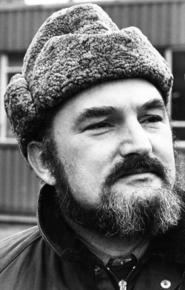
Alan was fitted for a suit in Savile Row in the Sixties (the date appears inside the jacket)which he was still wearing fifty years on, the last time was at Becky's wedding.
Men in Vogue
Condé Nast. November 1965-1970?
Associate editors were Robert Harling and Beatrix Miller of this fashion and lifestyle men's magazine. The cover of the first issue showed actor Edward Fox in a fur coat photographed by Norman Parkinson. It had 126 pages plus cover. Size: 12.25" x 9.125" (31cm x 23cm). It lasted at least until the winter of 1969.
Condé Nast drew back from launching Men in Vogue as an autonomous publication again in 1985, when Cosmopolitan, Elle and Harpers & Queen all had dedicated sections for men. It was not until 2005 that Men's Vogue appeared.
Contents of the first issue of Men in Vogue in 1965:
'A reference for Mellors': author Anthony Powell considered what happened to Lady Chatterley and her lover
extract from jazz man George Melly's biography, Owning Up
'The Englishman: the best dressed man in the world?' Featured James Astor, Cecil Beaton, Brinsley Black, Gay Kindersley, Nigel Lawson (BBC economics adviser and FT columnist), Jocelyn Stevens (editor-in-chief of Queen), Sir Fitzroy Maclean (a Scot), Christopher Gibbs, Lord Gormanston, Julian Ormsby-Gore
'The heroes of St Moritz': Tony Nash and Robin Dixon had won the world bobsleigh championship. Photographs by Terence Donovan
'The most Bailey girls in the world.' David Bailey on women he finds 'different, mysterious and interesting': Catherine Deneuve (his wife); Jean Shrimpton; Monica Vitti; Francoise Dorleac; Jeanne Moreau; Sue Murray
'Men and their cars': racing driver Jim Clark in a Lotus Elan; photographer Terence Donovan in a Silver Cloud II; Mark Boxer, editorial director of London Life, in a Rover 2000; Kevin Powell, Granada traines (Mini Moke); Peter Sheridan (Invicta 1930); Lord Snowdon (Mini and Aston Martin DB5);
'But you can get a girl with a gun' by Antonia Fraser
special report on winter clothes (cover feature). The models were all actors: Corin Redgrave, Edward Fox and Gilles Milinaire
'Ski and after'
Paris
'Narcissus revisited' grooming by Alan Brien
'What is travelling?': adventure, sport, business and travelling's sake
Christopher Gibbs' shopping guide to London
fashion award for 1965: worst-dressed man award for prime minister Harold Wilson
Friday, 13 June 2008


Bryn Mawr Classical Review 03.05.24
Alan's second novel, working title, 'And When Rome Falls', was based on reading around the life of Cicero and commissioned by David Godwin when an Editor at Jonathan Cape. It was very close to completion.
Alan was a member of the Society for the Promotion of Roman Studies.
Bryn Mawr Classical Review 03.05.24
Letter: More New Books with Ancient Settings
For some previous titles, cf. BMCR 3.4 (1992), 338. The most gorgeous new item is Roman Nights (St Martin's Press, NY, 1991), a novel by one Ron Burns, billed in the blurb as a UPI editor, Philadelphia Bulletin columnist, Los Angeles Herald Examiner crime reporter, and (now) novelist. His story is set between the last days of Marcus Aurelius and the murders of Commodus, then Pertinax. The protagonist functioning as privatus dickus is Livinius Severus, a minor noble, lawyer, and Stoic. His job is to solve a series of gruesome murders of Stoics, a nice thought (the murders, that is, not the solving). Lucan and Thrasea turn up as Stoics. So do characters with odd names, e.g., Cinna Catalus (sic). Most deliciously for devotees of the Petronian question, so do Trimalchio (as mine host, with some pastiche and filchings from the Cena) and 'his whore' Fortunata, with whom our hero has some jolly times, including one night of five couplings -- penile servitude, indeed! There is much quoting of Marcus Aurelius' 'just published' Meditations, and at one stage 8 rolls of papyrus are found containing Juvenal's Satires, with copious 'dirty' quotation from the sixth.
In France, Pierre Grimal has just brought out Les Memoires d'Agrippine (de Fallois, Paris, 1992), a fictional recreation of one of the most regrettably lost ancient documents of them all, the Memoirs of Nero's mum, whose doings would eclipse those of Fergie and Diana. So far, I've only seen the review in Le Canard Enchaine (5/8/92), but it sounds yummy. Incidentally, anyone visiting England in the near future might still be able to see a rare performance of Handel's early (1709) opera, Agrippina, with American soprana Susan Roberts in the title role -- one reviewer compared her to Bette Davis.
Falco is back, in Lindsey Davis' The Iron Hand of Mars (Hutchinson, London, 1992: I imagine there is an American edition), this time sleuthing in Germany, sent by Vespasian to look into the fates of Civilis and the XIVth Legion, with flashbacks to the hapless Quintilius Varus. Women play a big role in this new adventure.
Those more attracted to Greek settings may like A Choice of Murder (Owen, London, 1992) by Peter Vansittart, a reworking of Plutarch's account of Timoleon, suitably embellished to make a proper novel.
A mammoth new novel on Augustus is scheduled to appear later this year by Alan Brien. This author is a British journalist and humorist who (I suspect) may not be well known in North America, but Calgary libraries (not likely to be unique in this) contain his earlier titan, a novel about Lenin.
I've saved the bad news until last. The ineffable Colleen McCullough has recently inflicted volume two (The Grass Crown) of her threatened multi-volume saga on the late Republic on to a suffering world. I did my best to kill the thing off while reviewing the inaugural The First Man in Rome in The World & I (March, 1991), 406-12, but who am I to repel this march of Thornbirds in Togas?
Barry Baldwin University of Calgary
Ed.'s note:
As I read this letter, it seemed to me that we got to the bad news pretty early on. Would it be fair to ask whether any of these exercises do more than use Roman costumes to provide cheap thrills, with lashings (painfully evident in this account) of sexism? This series started because I called attention to Saylor's Roman Blood, which seemed to me both a decent murder mystery and a serious attempt to do justice to Cicero's Pro Sexto Roscio Amerino, and though it is a light enough sort of book, I still think it has merit. (Saylor has a new one in the bookstores called Arms of Nemesis, with a Spartacan theme but less closely tied, it would appear, to any specific text, but I've not yet had time to look at it.) Rather like the south central LA murder mysteries of Walter Mosley, who puts a lot of social history between the lines, or the early Tony Hillermans, while he still had fresh things to say about the Navajo.
JO'D 26 September 1992
Alan was a member of the Society for the Promotion of Roman Studies.
Bryn Mawr Classical Review 03.05.24
Letter: More New Books with Ancient Settings
For some previous titles, cf. BMCR 3.4 (1992), 338. The most gorgeous new item is Roman Nights (St Martin's Press, NY, 1991), a novel by one Ron Burns, billed in the blurb as a UPI editor, Philadelphia Bulletin columnist, Los Angeles Herald Examiner crime reporter, and (now) novelist. His story is set between the last days of Marcus Aurelius and the murders of Commodus, then Pertinax. The protagonist functioning as privatus dickus is Livinius Severus, a minor noble, lawyer, and Stoic. His job is to solve a series of gruesome murders of Stoics, a nice thought (the murders, that is, not the solving). Lucan and Thrasea turn up as Stoics. So do characters with odd names, e.g., Cinna Catalus (sic). Most deliciously for devotees of the Petronian question, so do Trimalchio (as mine host, with some pastiche and filchings from the Cena) and 'his whore' Fortunata, with whom our hero has some jolly times, including one night of five couplings -- penile servitude, indeed! There is much quoting of Marcus Aurelius' 'just published' Meditations, and at one stage 8 rolls of papyrus are found containing Juvenal's Satires, with copious 'dirty' quotation from the sixth.
In France, Pierre Grimal has just brought out Les Memoires d'Agrippine (de Fallois, Paris, 1992), a fictional recreation of one of the most regrettably lost ancient documents of them all, the Memoirs of Nero's mum, whose doings would eclipse those of Fergie and Diana. So far, I've only seen the review in Le Canard Enchaine (5/8/92), but it sounds yummy. Incidentally, anyone visiting England in the near future might still be able to see a rare performance of Handel's early (1709) opera, Agrippina, with American soprana Susan Roberts in the title role -- one reviewer compared her to Bette Davis.
Falco is back, in Lindsey Davis' The Iron Hand of Mars (Hutchinson, London, 1992: I imagine there is an American edition), this time sleuthing in Germany, sent by Vespasian to look into the fates of Civilis and the XIVth Legion, with flashbacks to the hapless Quintilius Varus. Women play a big role in this new adventure.
Those more attracted to Greek settings may like A Choice of Murder (Owen, London, 1992) by Peter Vansittart, a reworking of Plutarch's account of Timoleon, suitably embellished to make a proper novel.
A mammoth new novel on Augustus is scheduled to appear later this year by Alan Brien. This author is a British journalist and humorist who (I suspect) may not be well known in North America, but Calgary libraries (not likely to be unique in this) contain his earlier titan, a novel about Lenin.
I've saved the bad news until last. The ineffable Colleen McCullough has recently inflicted volume two (The Grass Crown) of her threatened multi-volume saga on the late Republic on to a suffering world. I did my best to kill the thing off while reviewing the inaugural The First Man in Rome in The World & I (March, 1991), 406-12, but who am I to repel this march of Thornbirds in Togas?
Barry Baldwin University of Calgary
Ed.'s note:
As I read this letter, it seemed to me that we got to the bad news pretty early on. Would it be fair to ask whether any of these exercises do more than use Roman costumes to provide cheap thrills, with lashings (painfully evident in this account) of sexism? This series started because I called attention to Saylor's Roman Blood, which seemed to me both a decent murder mystery and a serious attempt to do justice to Cicero's Pro Sexto Roscio Amerino, and though it is a light enough sort of book, I still think it has merit. (Saylor has a new one in the bookstores called Arms of Nemesis, with a Spartacan theme but less closely tied, it would appear, to any specific text, but I've not yet had time to look at it.) Rather like the south central LA murder mysteries of Walter Mosley, who puts a lot of social history between the lines, or the early Tony Hillermans, while he still had fresh things to say about the Navajo.
JO'D 26 September 1992
Oxford Journals.org Essays in Criticism
You need a subscription to access this but it brings to mind how well read Alan was and the ways in which he disseminated his reading. Who is John?
W. J. HARVEY Editorial CommentaryEssays in Criticism, 1968; XVIII: 1 - 14. ......University College (it was John's) to whom I had recently been introduced by one of my own undergraduate-pupils (was it Alan Brien?), who had also lent me a slim volume of the young man's very promising and elegant poems. John and I chatted briefly......
W. J. HARVEY Editorial CommentaryEssays in Criticism, 1968; XVIII: 1 - 14. ......University College (it was John's) to whom I had recently been introduced by one of my own undergraduate-pupils (was it Alan Brien?), who had also lent me a slim volume of the young man's very promising and elegant poems. John and I chatted briefly......
Thursday, 12 June 2008
Ruskin School of Art, Oxford
Clarifications and amendments will be made. But placing the suggestion, in the first instance, that Alan was a life model at the Ruskin School of Art, when at Oxford, and believed his form appeared in a sculpture commissioned for Westminster Cathedral (can't have been the Abbey, can it?). Clearly he modelled and we did once visit the Conway Library to see if we could find him, to no avail.
http://www.courtauld.ac.uk/research/photographic/conway/index.shtml
http://www.courtauld.ac.uk/research/photographic/conway/index.shtml
Wednesday, 11 June 2008
Peter Wilby The Guardian, Monday June 2 2008 Article history
Remembering Alan Brien
Last week's obituaries of Alan Brien, I thought, didn't quite pinpoint his place in the history of journalism. Brien, as one obituarist said, was a critic and essayist in the tradition of Belloc and Chesterton. He reviewed film, theatre and books when reviewers were among the biggest newspaper stars. Now, the stars are general columnists, writing about life, the universe and everything, but mainly about themselves and their families.
Brien, who died at 83, straddled those two eras, being not only among the last of the old, but also among the first of the new. Harold Evans, when Sunday Times editor, said Brien could get more interesting copy from the fluff in his navel than some hacks could get from a month on the road. Once, when he was driving up the motorway with his wife, the Guardian's Jill Tweedie, a tiny pebble shattered the car windscreen. Between them, I swear, they got six columns out of it. The record probably stands to this day.
Contact the Media editor
editor@mediaguardian.co.uk Report errors or inaccuracies: reader@guardian.co.uk
Letters for publication should be sent to: letters@guardian.co.uk
Last week's obituaries of Alan Brien, I thought, didn't quite pinpoint his place in the history of journalism. Brien, as one obituarist said, was a critic and essayist in the tradition of Belloc and Chesterton. He reviewed film, theatre and books when reviewers were among the biggest newspaper stars. Now, the stars are general columnists, writing about life, the universe and everything, but mainly about themselves and their families.
Brien, who died at 83, straddled those two eras, being not only among the last of the old, but also among the first of the new. Harold Evans, when Sunday Times editor, said Brien could get more interesting copy from the fluff in his navel than some hacks could get from a month on the road. Once, when he was driving up the motorway with his wife, the Guardian's Jill Tweedie, a tiny pebble shattered the car windscreen. Between them, I swear, they got six columns out of it. The record probably stands to this day.
Contact the Media editor
editor@mediaguardian.co.uk Report errors or inaccuracies: reader@guardian.co.uk
Letters for publication should be sent to: letters@guardian.co.uk
Der Teufel
When Alan's boyhood friend, David Maccaby, who became a painter and later blind, took Alan home for the first time, his mother, on opening the front door, reeled back with 'Der Teufel', Satan. The Hebrew term for Satan has a decidely different meaning than in Christianity. It is the title of a Prosecutor at the Divine Court.
Satan, the Devil, Pan....
A link to John Milton's 'Paradise Lost', the book Alan carried with him when flying as a rear air gunner in the Lancaster.
Satan, the Devil, Pan....
A link to John Milton's 'Paradise Lost', the book Alan carried with him when flying as a rear air gunner in the Lancaster.
A Film Impression of Jesus College, Oxford in 1948: 'Our College'
Administration by Alan Brien, Peter Broadhurst also Geoffrey Hunter, Peter Davis, Derick Grigs.
Reissued 2006. Jesus College, Oxford.
Reissued 2006. Jesus College, Oxford.
Subscribe to:
Posts (Atom)