Tuesday, 10 June 2008

Sunderland Echoes

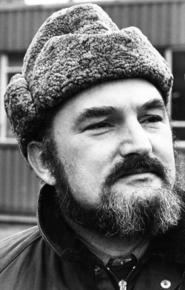
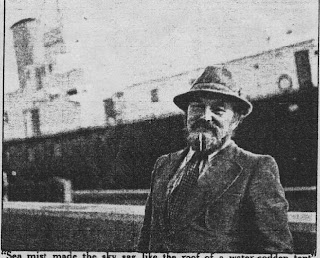
Alan Brien describes his ‘colonial experience’ growing up in the North East; photograph by Duffy


In my mind’s eye, better these days than my body’s eye, I see its sea and streets. Focusing closer, the Docks the Tram Shed, where my brothers worked and where my father worked, twin poles for me of what was practically an off-shore island. Sunderland, origin­­­ally ‘the Sundered Land’.

The sea, the North Sea, James Joyce’s “snot-green, scrotum-tightening sea”, which didn’t stay long in its proper playground, the endless Saharan scimitars of sandy beach or the crane-fringed fort­resses of the quays, but reared up over the town, like a Disney storm-cloud.

Coal fires on sun-glazed summer afternoons. Parlour doors hung with inch-thick layers of plush drapery. Steamy, sweating caves of bed-clothes inhabited by dented aluminium hot-water bottles wrapped in old flannel drawers, or heavy stone jars with heavy stone stoppers. Backrooms of beer-only pubs, where the reg­ulars, sitting so near their thighs interleaved, formed an idol­atrous circle round the totem of glowing pillar-box stove.

Winter promenades along a fume-besieged front, the waves booming like cannons as they thundered under the Hapsburg lip of the beach wall and their spray exploded in great frozen stars of emerald grapeshot. Cold, the Enemy, always in your bones, worse even than the Tories

The last tram on Saturdays almost a jamboree, a cold-climate fiesta, packed with illuminated turn-to-mask faces, passengers swaying and singing inside its hurtling, glassy, goldfish tank, while the conductor gave up jangling his useless ticket punch, and the driver, cut off from us all behind his swinging chain, stamped his clanging bell and groaned us round right-angle bends on his way to the last stop before his terminus, my father’s Tram Shed.

At my father’s funeral, when the sea mist made the sky sag like the roof a waterlogged tent and rose among the grave stones like puffs of smoke, six old tramways-men materialised like genies, immaculate in long moth-balled navy and red uni­forms, ticket-punches gleaming, to carry their comrade’s coffin - a work­ing-­­class ceremonial no Guardees could have out-smarted -­ before vanishing again to take the new-fangled bus home on their pensioner’s travel passes.

Nobody ever goes to Sunderland by accident. No­body ever happens to pass through it. It’s not on the road, or rail, to anywhere, or the centre for anything. An Anglo-Saxon Alsatia, it was still to us, growing up there in the Thirties, a North-Eastern Afghanistan where we were as cut off from that faraway capital of Empire, London, as any other colonial people. We weren’t directly occupied by Southern forces, but ruled instead by proxy, a puppet province subjugated by mass unemployment, pacified by the Means Test; our closed-down shipyards and part-time pits barely worth their exploitation. We were all working-class — even the one in three out-of-work; some, like several of my uncles, since the Armistice of 1918. We grew up in the class war, a war our side had already lost, though. Encouraged by my father, I joined a maquis which fought back at street-corner meetings. Even our middle class — the managers and small businessmen — were working class; though they sided with the oppressors, the absentee Tory owners of all we sur­veyed. But then, the mass of the natives were collaborators too, voting for the enemy — even if they secretly despised their foreign masters.

For everyone outside did seem foreign. Sunderland was England. The North East embodied all other worthwhile points of the compass. Who were the true Northerners, if not us? The Topographical War absorbed, and sublimated, much of the passion which would have fuelled the Class War. Our borders were between Darling­ton and York. Manchester, described by the alien-controlled BBC as Capital of the North was to us the Gateway to the Midlands. They still laugh, up in Sunderland, at Mike Parkinson’s Barnsley being anything but a Potemkin village, run up overnight for the Hampstead tourist trade, full of Berlitz proles in comic costume, speaking a regional Esperanto probably learned off Linguaphone records.

Sunderlanders thrive on para­dox— you could equally say that nobody goes there, except by accident. Today, yesterday, they’re proud and self- pitying, resent you leav­ing, gawp at you coming back. Good with their hands, canny with their brains, tireless, indestruct­ible, con­fident of out-doing Japs, Wops, Krauts and Yanks in anything. Yet inocul­ated against the Work Ethic, always able so find summink bettar ta dee. Never heard of the Problem of Leisure, (something the De­pression gave plenty of), so prodigious and compulsive talkers, footballers, growers of leeks, breeders and trainers of dogs, workmen’s clubbers.

Sunderland is a one-storey town full of tall-storey men, a place flattened into a [?], near-
provincial acres of terraced bungalows giving way only to council estates consisting of serpentine culs‑de-sac, making a walk home over twice the distance in half the time a Londoner would queue for a number 11 bus.

They have an indelible local loyalty, history, [??] idiocies, yet watch the old [??] waste with a cynical apathy towns have suffered a planning [?] transplant, ancient mazes re­placed by solid concrete plugs. Only Sunderland has been disembowelled with gaping holes. Our Big Ben town hall toppled, into a grassy dent which floods whenever it rains, like every Sunday. Our grand­iose Grand Hotel vaporised into a cinder car park. Nowhere have they more cause to hate the Good Old Days, nowhere do they mourn them with such elegiac eloquence.

Home-town love is honour­­able patriot­ism. Sunder­land: my Tin Pan Alley song. The hole in my foot I got vandalising a private develop­ment which dared infiltrate our council estate...the swollen eye-ball from the clod of mud while playing ghouls in the dark…stealing chocolates from Woolworths…seeing how far the tide came up your face in the Holy Rocks…riding our kid’s bike between trams… watch­­ing pigs cut open over the slaughterhouse wall…spouting Bolshevism on a box on the sea front... drinking in the Bede School library, hiding the French-letter catalogue inside Masefield’s Life of Jesus…a girl in Mowbray Park who [?] like Veronica Lake and who looks like Irene Handl and [?] the new generation have no standards

Sunderland, I love it, I don’t have to like it. After all, the people who live there, they do, and they don’t.

© Times Newspapers Ltd. 1976

Monday, 9 June 2008

Defeat of a Drinking Man - By Alan Brien

One day in 1956, it reached the ears of the Evening Standard that Hemingway was in mid-Atlantic on the Liberte. And some officious desk-bound executive conceived the idea of sending me down to Plymouth to extract an interview as he passed within sight of the English shore. My journey down there was made miserable by the thought that I might have to scale some slippery, swinging rope ladder, green with fear and sea-sickness, while the great man sneered from the bridge.

Needless to say, the operation which had been simply demonstrated in Shoe Lane by moving a finger across a tiny map of England turned out, when put into effect by a flesh-and-blood correspondent dealing with actual trains, motor-cars, boats and bureaucrats, to be an odyssey of snags and frustrations. Once in my compartment, I was seized with a fit of nervous amnesia and suffered from delusions that I should be going to Portsmouth or Southampton. The shipping line at Plymouth was shrouded in a pall of vagueness about the hour, or even the day, of the Liberte's arrival. Some officials promised that I could travel out to its mooring spot on the luggage tender. Others insisted that the Customs authorities would not permit any visitors. The shore-to-shore radio telephone operator connected me with a laconic American voice which insisted that Mr. Hemingway had failed to turn up in time for the departure from New York.

My only success was in hiring a miniature tug affair, steered by a Bogartian, unshaven salt in plimsolls and a yachting cap, for five pounds. That at least would give a professional look to my expense sheet. We seemed to spend hours circling the ship while the suitcases spilled out of some hole in its side like giant children's bricks, but no one resembling the great man peered out from among the faces along the rails. Once inside, not up a rope-ladder but across an almost equally vertiginous and shuddering ramp, I realized that I had not the faintest idea of where to start looking. It had never occurred to me that a liner could be so enormous or complicated -- it was like being insinuated into the base of a bee-hive and told to have a word with the queen.

My deadline, which had once seemed so comfortingly distant, was now almost upon me. I started running the corridors shouting, "Ou est Monsieur 'Emingway? S'il vous bloody plait." Various steward figures in dazzling white ducks gave me cabin numbers, apparently at random, in French, and I plunged, sweating and Medusa-haired, into various wrong staterooms.

Twice I found bars tucked away in windowless metal caverns. The bartenders denied any knowledge of 'Emingway and suggested different bars. Other journalists, who must have been deposited aboard by submarine, appeared at the end of long carpeted vistas, pantomimed fury like the Demon King and contempt for rival papers, and made off at a trot.

Eventually, having traversed the ship a couple of times, I arrived back at one of the bars and discovered there a battered, burly figure humped on a stool. He didn't look like Hemingway as much as like an old, over-exposed, badly retouched photograph of Hemingway. His hair and beard seemed to have been knitted on heavy wooden needles out of shiny, new delicate barbed-wire. His face, such of it as was visible, was as bright as a peeled orange. And as he spoke tiny vessels appeared to explode across his cheeks like Very shells over a battlefield. "Mr. Hemingway," he said, "has nothing to say to the press, but I will buy you a drink."

He spoke very slowly and carefully like someone counting out small change in foreign currency and watching to spot the moment when he is being overcharged. I took the drink and poured it down into a stomach already distended by a queasy brew of ale and resentment. Now I was here I couldn't think of a single thing to say. A hasty rake over the surface of my mind produced a recent small news item -- some bumptious tourist in Havana had taken Hemingway's place at a bar and been picked up and ejected by an indignant boozy crony. What was the use of Preaching about the True and the Beautiful and the Good and That's the Way It Should Be Among Men, I asked, if the preacher behaved like any Hollywood bum on a spree?

Hemingway punched himself in slow-motion on the ear as if annoyed that it should be transmitting such gibberish.

"You a drinking man?" he asked.

"Yes," I said.

"You have your favorite bar?"

"I suppose so," I said.

"Then you have your favorite place at that bar. And that is your place. And they keep it for you."

"No I don't," I said, "and no they don't."

"Then it’s not a real bar," he said amicably. "In a real bar, they keep your place where you put your back to the wall. That's all."

"That’s not all," I said, stamping my feet. "That's Warner Brothers gangster talk. How would you like it if I had you thrown out of my bar?"

Just then a fat Frenchman appeared. "I think my seat, sir," he announced.

Hemingway slid off like a boxer who hears the bell for the next round.

"Excuse me. Excuse me," he said. "Your seat, certainly."

There was a longish pause and then we were both shaking with laughter until the counter rattled.

"To hell with newspapers," he shouted. "Come to France. We'll get off the boat and just drive into anywhere."

I thought of the nicotined finger, the last edition, the pay slip, Lord Beaverbrook. "Some other time," I said. Back on the shore I scribbled my newsless story as I waited for the call to FLE 3000 to come through. At last it came --"the office is closed for the day, "they said, "try tomorrow morning."

And that’s the way it was.

A born defector

Spectator, The, Apr 26, 2003 by Vestey, Michael

Radio

Since Malcolm Muggeridge, one of the most famous and illustrious journalists of the last century, died in 1990 little has been heard of his prolific sayings, writings and numerous television programmes. I understand, though, his 1930s novel Winter In Moscow is in paperback, an important book exposing the evils of Soviet communism. Richard Ingrams wrote his biography but, as Muggeridge himself would have acknowledged, television success is as ephemeral as many other occupations.

Last Saturday, though, some of this was redressed by Radio Four when Miles Kington presented an hour-long programme about his life and work in The Archive Hour - St Mugg, a reference to the nickname he acquired during his final religious phase. Kington described him as the `best-known gadfly of journalism ... the court jester of the media. the smiling face that pointed out the emperor had no clothes on'. He played the famous exchange between Muggeridge and the critic Alan Brien in which the latter observed, `What does worry me about you is that, I think, you are a born defector. I won't say that you mess on your own doorstep, not at least until you've moved, and once you've moved you go around and throw stones though the window and set fire to the basement.'

Brien cited his period on the Manchester Guardian and his later abuse of the paper, his time in the 1930s Soviet Union and his disillusionment with communism, his 'outstanding' editorship of Punch, which he thereafter hated, his fame as a television journalist and `now you say it's an idiot's lantern', his varied and active sex life and the later denunciation of sex as appalling and ludicrous. Disarmingly, Muggeridge, with those unforgettable stretched vowels. replied, 'I think it's extraordinarily true. Alan thinks it's a kicking in the teeth but it isn't that, it's a deep sense of dissatisfaction with everything one's done and everything one's been associated with.' Re added, `Alan puts it very flatteringly as a matter of fact because it's not true that I was a particularly good editor of Punch.'

Brien had concluded by saying, `Now what I would like to see at the age of 71 is that you should join the Roman Catholic Church and prophesy ten years later you would leave it in a blaze of publicity.' Although Muggeridge said that he loved the Catholic Church he wouldn't join it, partly because of the truth of what Brien had said. In fact, though, he did but died before he could defect from that, assuming, of course, that he might have done if the pattern of his life was anything to go by. Born in Croydon to a socialist father who became a Labour MP for a time, Muggeridge, after studying chemistry at Cambridge which he hadn't liked, eventually joined the Manchester Guardian as it then was, and was posted to Moscow with his wife Kitty.

At that time he regarded capitalism, as Marx had foretold, as irretrievably moribund and doomed, offering its captive workers no hope. As Kington put it, he soon saw through the charade and realised that Stalin was introducing a tyranny not a utopia, starving people to death not feeding them. He tried to warn his readers but the Left were blinded by wishful thinking and refused to believe him. He published Winter In Moscow, the novel's hero based on himself.

His contempt for visiting socialists grew. `For the most part,' he said in a later television programme, `they were intellectuals of the Left, privy councillors to be, contributors to the New Statesman, the flower of our Western civilisation ... I can hear them now in the eager high-pitched voices explaining away privations they'd never have to endure, an oppression that would never reach them. The most publicised and certainly the most fatuous of all the visitors was, alas, Bernard Shaw.' He turned on his friends, the rather ridiculous socialist thinkers, Beatrice and Sidney Webb, whose book, Soviet Communism, A New Civilisation, had been, they proudly told him, thoroughly checked by the Soviet ambassador to London.

Although irreverent, a natural satirist and iconoclast, he was clearly searching for something which turned out to be, towards the end, religious faith. Was he really a hypocrite, people wondered, with his earlier womanising and then rejection of sex, his support for Mary Whitehouse and Cliff Richard in the Festival of Light which was opposed to what it called moral pollution, and his admiration for and promotion of Mother Teresa. Having sent up most aspects of modern life he became the target of satire, particularly in a sketch by Peter Cook, previously not broadcast, in which Muggeridge and a theologian friend set off in the steps of St George in Willesden, a parody of a programme Muggeridge had made about St Paul. No, I think Alan Brien got it right: he was a born defector and a vastly wise and entertaining one at that.

Copyright Spectator Apr 26, 2003

Alan's response to a review of "Lenin - The Novel"

To the Editor (New York Times):

Any British author, not to mention the author of a first novel, must be gratified to get the space you gave ''Lenin: The Novel'' in your issue of Oct. 16 (1988), even though your reviewer, Ellendea Proffer, runs to impressive length to describe my fiction as a cartoon of fact.

Owing to our postal strike, which lingered long in the Welsh mountains, and some problems with Royal Mail muleteers, it is probably rather too late to enter into any dispute over the details. So I will forgo pointing out that, contrary to her assertion, there are many sources testifying to Lenin's appalling clothes and vulgar abuse - you have only to look at Aleksandr Solzhenitsyn's deeply researched ''Lenin in Zurich.''

It scarcely needs any rebuttal to squash your reviewer's shocked cry - ''Mr. Brien actually seems to admire this historical bloodthirstiness'' - by pointing out that nowhere does ''Mr. Brien'' express any opinions. My book is a work of imagination, the fictional diary of a real person. Naturally, the first-person narrator tends to believe that what he is doing is right. What would your reviewer expect - ''Dear Diary: I am a blood-soaked monster, on a throne of skulls''?

ALAN BRIEN Corwen, Wales

Collection of Alan Brien's quotes

  1. New York waiters, probably the surliest in the Western world are better images of their city than that journalistic favorite-the taxi driver.

  2. (of annual migration of Americans to Great Britain) - The blue-rinse warbler and her horn-rimmed mate are rare and overdue this year.

  3. The majority of them give the impression of being men who have been drafted into the job during a period of martial law and are only waiting for the end of the emergency to get back to a really congenial occupation such as slum demolition or debt collecting.

  4. I have done almost every human activity inside a taxi which does not require main drainage.

  5. The country is laid out in a haphazard, sloppy fashion, offensive to the tidy, organized mind.

  6. Violence is the repartee of the illiterate.

  7. This Thane of Cawdor would be unnerved by Banquo's valet never mind Banquo's ghost.

  8. (of Steve McQueen) - His features resembled a fossilized wash rag.

  9. (of Nicol Williamson) - (as having)...eyes like poached eggs, hair like treacle toffee, and a truculent lower lip protruding like a pink front step from the long pale doorway of his face.

  10. A Pinter play is like a Hitchcock film with the last reel removed.

Critic bites dust, dogs dance for joy

Alan Brien died last Friday. He was the first, and best ever, theatre critic on the Sunday Telegraph; indeed he was the first appointment to that newspaper when it was launched in the early 1960s.

That was the measure of Alan’s distinction. The Sunderland son of an electrical engineer on the town’s trams, he went to Bede Grammar School and Oxford via a stretch in the RAF at the end of the war including a raid on Hitler’s mountain retreat of Berchtesgarden.

He was both earthy and urbane, worldly and thoroughly radical, a brilliant talker and writer on many subjects and a great rival, as well as friend, of Kenneth Tynan. They don’t make critics like him any more, certainly not on the Sunday Telegraph, anyway.

He was a regular star contributor to Plays and Players when I edited the magazine in the mid 1970s. He was always late with his copy, to the extent that I used to have to go round to his Paddington apartment and wrench it physically from his own hands.

I’d stand in the hallway while he finished it off at the typewriter and wait for him to emerge, tousled and invariably hung over, in his dressing gown. He was married four times, had five children and wrote just one book, a long simmering faction called Lenin: The Novel; tragically, I don’t know anyone who’s ever read it.

Once, he appeared in our Victoria Street offices after an exceedingly good liquid lunch in El Vino’s, where he formed a remarkable double-act with another great critic, Philip Hope-Wallace. He was at least two days late with the copy. “What am I writing about this month?” he asked. “Trevor Nunn’s sequence of four Roman plays at the Aldwych,” we replied.”How many words?” “Fifteen hundred.”

He sat in a corner, fumbling with a handful of cuttings which turned out to be a few newspaper reviews of the same production to jog his memory and feed his argument. He reeked of lunch and could hardly sit straight in his chair.

One hour later he handed over fifteen hundred words of the highest standard, witty, descriptive and appreciative, incorporating a dispute he once had with Lindsay Anderson over whether or not Shakespeare ever wrote a right-wing play (Brien grudgingly agreed with Anderson that Coriolanus fitted that bill).

Turning over these memories — “the last literary-journalistic giant in the tradition of G K Chesterton, Hilaire Belloc and James Agate,” said Philip Purser in his Guardian obit, not unjustly — I set off in the howling wind and rain of another typical Bank Holiday Monday for a tramp on Hampstead Heath.

We’d hardly gone fifty yards when I saw a curious fellow in a pork pie hat barking instructions, and throwing balls, at a trio of deep black mongrel dogs while an attractive blonde lady kept guard over a zipped up baby.

The picture came into focus. The man was Ken Campbell, the dogs were his dogs, the lady was Prunella Gee, the actress and mother of his daughter Daisy, whose baby was in the push chair.
“Right, as it’s you,” rasped the reckless genius of Epping Forest, “we’ll ‘ave an impromptu dog show!” And he turned our little patch of sodden greensward into a mini circus ring of leaping canines, pouncing and prancing, racing and fetching.

Within minutes, several other dogs had joined in and a small appreciative audience stood by with silly grins on their faces.

Ken was sorry to hear about Alan Brien, though he hardly knew him. “The thing is,” he said,”he gave the appearance of knowing what he talked about, even if he didn’t, and he had a wild, hedonistic streak about him which is good news, eh?”

We parted company and tramped on towards Kenwood to complete our Bank Holiday soaking and enjoy an excellent pint of beer in the Spaniard’s Inn. A good day was completed by catching up with the Martin McDonagh film, In Bruges.

In Bruges is a real gem, and an astonishing first movie by the author of The Pillowman and The Beauty Queen of Leenane. It has all McDonagh’s qualities as a playwright — great dialogue, terrific plot twists, sardonic humour, hilarious violence — as well as a naturally instinctive cinematic nous.

The story of the two sad hitmen stranded in Bruges while awaiting instructions is beautifully shot (as indeed are most of the characters by the end) and edited and also, ironically, serves as a great tourist brochure for Bruges.

In some ways the film is an hommage to Nicholas Roeg’s Don’t Look Now, the canals of Bruges substituting for those of Venice, but the tone is finally all of its own, and the performances of Brendan Gleeson and Colin Farrell as the hitmen and Ralph Fiennes as their shadowy boss are absolutely cracking.

Michael Coveney - Tuesday, May 27th, 2008 - What's on Stage

Peter Green

Actors' agent and resident of Denville Hall who welcomed Alan to the fold with "after a new show opened we'd go to the newspapers looking for "what has Bernard Levin written, what does Ken Tynan say but what does Alan Brien think?"