Saturday, 7 June 2008


Obituary Ham & High June 5 2008
Newspaper critic who loved life in beloved Highgate: Award winning writer felt on top of world in village
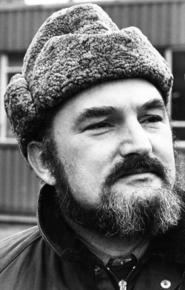
A journalist and critic from Highgate who had a distinguished career spanning 50 years has died at the age of 83.
Alan Brien, who was once married to feminist writer Jill Tweedie, penned reviews and columns for publications including the New Statesman, the Spectator, the Sunday Times and Punch. While writing on politics for the Sunday Pictorial, he became the first drama critic of the Sunday Telegraph and was twice awarded the Critic of the Year title.
He lived with his fourth wife, the writer Jane Hill, at their home in one of the most ancient cottages in the village in the Highgate Bowl.
A great walker, he loved Highgate for its proximity to open spaces and because so many friends from his career, including the Observer's film critic Philip French, live nearby.
"He always walked on the heath with our lurcher Solly", said Ms Hill. "He loved Highgate Wood and Queen's Wood". He walked all the way down to Soho for his theatre reviews and we would sometimes walk up to Finsbury Park and have a cup of tea and a biscuit together."
A regular reader of the Ham & High, Mr Brien featured in our Who's Who column in March 2002, where he said he enjoyed looking out of his window because he could see the tops of trees which made him feel like he was on top of the world.
His only complaints were that the village needed a nice arts cinema and the terrible steepness of the hill. "I sometimes see people hanging onto lampposts to pause for breath as they walk up it," he said at the time.
He was born in Sunderland on March 12, 1925, the fifth and last child of a tramways inspector. From his local grammar school he went on to read English at Jesus College, Oxford, where he was a contemporary of rival theatre critic Ken Tynan. He joined the RAF in 1943 and as an air gunner he took part in many sorties. Had he not been grounded by the flu he would have been involved in the Dresden raid.
By the mid 1950s he was the Observer's television reviewer and later became its film critic. He transferred to the Evening Standard, which sent him to New York.
But his main ambition was to write about the theatre, a role he took at the Spectator from 1958 to 1961. In 1967 he was recruited by the new editor of The Sunday Times, Harold Evans, who sent him to report in Moscow and Saigon.
"He just loved life," said Ms Hill. "He didn't care about possessions - he cared about food and friends, eating and drinking, politics and above all books.
"He had very devoted friends who admired him immensely. Even if he was critical of them it was in a way they found acceptable because they always trusted his judgement. People cared about him.
"He loved fires - the cottage was very archaic when we moved in in 2001 but nothing much was done to it. One thing he did do was to open up all the fireplaces - we always had open wood and coal fires.
"He was extremely nice to women. When we first met we just talked and laughed all the time. He was one of the most articulate people I have ever known and he was very funny.
"He was very loyal and was an astonishingly good writer. He did care about Highgate Village and about preserving it but he wasn't against new things. He was always open and thought the place needed to grow."
Mr Brien died on May 23 after a battle with Lewy Body disease. He is survived by his wife, his five children and three stepchildren.
Tan Parsons
A journalist and critic from Highgate who had a distinguished career spanning 50 years has died at the age of 83.
Alan Brien, who was once married to feminist writer Jill Tweedie, penned reviews and columns for publications including the New Statesman, the Spectator, the Sunday Times and Punch. While writing on politics for the Sunday Pictorial, he became the first drama critic of the Sunday Telegraph and was twice awarded the Critic of the Year title.
He lived with his fourth wife, the writer Jane Hill, at their home in one of the most ancient cottages in the village in the Highgate Bowl.
A great walker, he loved Highgate for its proximity to open spaces and because so many friends from his career, including the Observer's film critic Philip French, live nearby.
"He always walked on the heath with our lurcher Solly", said Ms Hill. "He loved Highgate Wood and Queen's Wood". He walked all the way down to Soho for his theatre reviews and we would sometimes walk up to Finsbury Park and have a cup of tea and a biscuit together."
A regular reader of the Ham & High, Mr Brien featured in our Who's Who column in March 2002, where he said he enjoyed looking out of his window because he could see the tops of trees which made him feel like he was on top of the world.
His only complaints were that the village needed a nice arts cinema and the terrible steepness of the hill. "I sometimes see people hanging onto lampposts to pause for breath as they walk up it," he said at the time.
He was born in Sunderland on March 12, 1925, the fifth and last child of a tramways inspector. From his local grammar school he went on to read English at Jesus College, Oxford, where he was a contemporary of rival theatre critic Ken Tynan. He joined the RAF in 1943 and as an air gunner he took part in many sorties. Had he not been grounded by the flu he would have been involved in the Dresden raid.
By the mid 1950s he was the Observer's television reviewer and later became its film critic. He transferred to the Evening Standard, which sent him to New York.
But his main ambition was to write about the theatre, a role he took at the Spectator from 1958 to 1961. In 1967 he was recruited by the new editor of The Sunday Times, Harold Evans, who sent him to report in Moscow and Saigon.
"He just loved life," said Ms Hill. "He didn't care about possessions - he cared about food and friends, eating and drinking, politics and above all books.
"He had very devoted friends who admired him immensely. Even if he was critical of them it was in a way they found acceptable because they always trusted his judgement. People cared about him.
"He loved fires - the cottage was very archaic when we moved in in 2001 but nothing much was done to it. One thing he did do was to open up all the fireplaces - we always had open wood and coal fires.
"He was extremely nice to women. When we first met we just talked and laughed all the time. He was one of the most articulate people I have ever known and he was very funny.
"He was very loyal and was an astonishingly good writer. He did care about Highgate Village and about preserving it but he wasn't against new things. He was always open and thought the place needed to grow."
Mr Brien died on May 23 after a battle with Lewy Body disease. He is survived by his wife, his five children and three stepchildren.
Tan Parsons
Friday, 6 June 2008
Tuesday, 3 June 2008
Alan Brien by Paul Johnson
Alan Brien was the best light essayist of his day, first in the Spectator, then in the New Statesman. He could conjure up a thousand words of gossamer prose out of nothing and make it flavoursome, tangy, touching, ribald, pointed and, on occasion, riotously funny and even robust. The tone depended entirely on his mood when he wrote it. To produce these confections he deployed immensely wide but discerning reading, an enviable memory for incidents both delicious and striking, a wide acquaintance among the great, talented and notorious, especially among actors, writers, politicians and media people, and a taste for the grotesque. He had a good ear, too, for accents, speech patterns and verbal eccentricity. Into his tales he would weave individual anecdotes, of which he had an immense store, which he accumulated, improved, sharpened and detailed with delicacy and gusto.
These little masterpieces involved a vertiginous method of last-minute improvisation. Alan was always up against the deadline, and he needed to hear the rumble of time's chariot to be stimulated into producing. Sometimes I had to lock him in. But he always got the stuff out in the end, and it was always worth waiting for.
I salute the passing of a master wordsmith, a sharp, saturnine, jovial, hugely resourceful and original giant of his craft - a craft which has punctuated the history of English letters, and of which he was an exemplary practitioner.
Paul Johnson
These little masterpieces involved a vertiginous method of last-minute improvisation. Alan was always up against the deadline, and he needed to hear the rumble of time's chariot to be stimulated into producing. Sometimes I had to lock him in. But he always got the stuff out in the end, and it was always worth waiting for.
I salute the passing of a master wordsmith, a sharp, saturnine, jovial, hugely resourceful and original giant of his craft - a craft which has punctuated the history of English letters, and of which he was an exemplary practitioner.
Paul Johnson
Sunday, 1 June 2008
Independant Obituary - 31st May 2008
Alan Brien: Witty, intelligent journalist and author of 'Lenin: the novel'
In the late 1950s The Spectator was going through a golden period. Brian Inglis, editor of the weekly current affairs journal, had gathered round him a sparkling galaxy of writers who made it compulsory reading for anyone wanting to understand how Britain was throwing off the restrictions and inhibitions of the immediate post-war period.
Alan Brien was a pivotal member of this all-star team that included Bernard Levin, Henry Fairlie and Katharine Whitehorn. He served as the drama critic, but wrote on many other topics with a combination of wit, intelligence, directness, social concern and a keen sense of the ridiculous. Although the magazine was owned by Ian Gilmour, a Conservative MP, it was then more radical in outlook than its stodgy left-wing rival, the New Statesman. Whatever the politics of the paper he was writing for, Brien always counted himself a socialist.
As with most of his colleagues, his stint at The Spectator, then housed at Gower Street, served as the springboard for a career in which he worked for several of London's principal journals and newspapers. He was hired in 1961 as theatre critic for the newly launched Sunday Telegraph, on the personal initiative of Lord Hartwell, the paper's proprietor. (Nearly 20 years later he showed commendable loyalty to his erstwhile patron by refusing to write a hostile profile of Hartwell for Sir James Goldsmith's short-lived magazine Now!)
In six years on the Telegraph, Brien was twice named Critic of the Year in the Hannen Swaffer Awards, precursor of the British Press Awards. He was also writing regular columns for a succession of Fleet Street titles – the Daily Mail, Sunday Dispatch and Sunday Pictorial – before returning to The Spectator as a freelance columnist, later switching to the revived New Statesman.
In 1967 he left the Telegraph for the burgeoning Sunday Times – one of the earliest recruits of the new editor, Harold Evans. It was there that he did his most eye-catching work, for eight years writing a provocative, gossipy back-page column that many readers turned to first as they picked up their paper on a Sunday. He was sent on the occasional overseas foray, including short stints in Moscow and Saigon – but it was as a sharp observer of the domestic social and cultural scene that he made his most distinctive mark. In 1976 he gave up the column to become the paper's film critic, a post he filled with distinction and perception until 1984.
All this amounted to an unlikely career course for the son of a Sunderland tram driver. Alan was the youngest of five children of Ernest Brien and Isabella, née Patterson, who came from of a family of 13. Educated at Bede Grammar School in Sunderland, he joined the Royal Air Force as an air gunner when he was 18. On leaving the service in 1947 he went up to Jesus College, Oxford, where he read English and became part of coterie of undergraduates who would go on to make their mark in the media – Robert Robinson, Robin Day, James (later Jan) Morris, Kenneth Tynan, Kenneth Harris, Godfrey Smith, Keith Kyle – as well as budding politicians such as Shirley Williams, Michael Heseltine, Jeremy Thorpe and Tony Benn.
It was also in 1947 that he married the first of his four wives: Pamela Jones, a Home Counties hairdresser, with whom he had three daughters. His first job in journalism was on a film magazine, Mini-Cinema, and that set the course for much of his later career as a critic of the performing arts. By 1953 he was writing on film for the weekly magazine Truth, and in 1954 he became one of The Observer's earliest television critics. He was also the film critic of the London Evening Standard, until in 1956 the Standard appointed him New York correspondent and gave him his own column. It was this that led Brian Inglis to invite him on to his Spectator team.
In 1961 he married Nancy Ryan, an American theatre producer, and they had a son and daughter. Then, in 1973 he left her for the feminist writer Jill Tweedie, and – despite the fact that she wrote rather harshly about him ("He reminds me of an old warthog I once saw in an African twilight") – they were still together when she died in 1993. Three years after her death he married Jane Hill, a writer. In an affectionate address at his funeral his daughter Joanna, one of twins from his first marriage, commented: "Each marriage was the best."
He was gregarious and, again quoting Joanna, "had a huge appetite for life, love and all its sensual pleasures, none too small to be written about". A sharp if mordant wit was a principal feature both of his journalism and his conversation. In 1964 he was being threatened with a libel action by Lord Beaverbrook, the newspaper magnate, over something he had written in one of his columns. At a theatre opening night, as he was sharing a drink with fellow critics, one of them relayed the news that Beaverbrook had just died. Brien was jubilant. "I feel," he declared, "as though someone just told me that Agincourt has been called off."
He was always an optimist: in his Who's Who entry for 2000 (amended in later years) he listed four publications in his name, but only two were ever published. They were Domes of Fortune (1979), an extended illustrated essay about women's breasts, and Lenin: the novel (1987). The latter was an immensely ambitious documentary novel of more than 700 pages, which had a mixed reception. An appalled reviewer for the New York Times criticised him for "language no Russian intellectual would use", quoting as an example: "That's what it is, we have been booted up the arse."
The two works which remained unpublished – because he failed to finish them – were an autobiography, to be called "All Right for Some", and a novel about the fall of Rome. The latter was nearly completed when, in 2001, he was diagnosed with Lewy body disease, a degenerative condition that affects both mental and physical functions. The symptoms were spasmodic but over time they worsened and he was never fit enough to finish work on the book.
In his last years Brien was cared for by his wife in their home at Highgate, north London, where he continued to entertain friends and former colleagues with enthusiasm and generosity. In January of this year he moved to Denville Hall, a home near London for those needing full-time care.
Michael Leapman
In the late 1950s The Spectator was going through a golden period. Brian Inglis, editor of the weekly current affairs journal, had gathered round him a sparkling galaxy of writers who made it compulsory reading for anyone wanting to understand how Britain was throwing off the restrictions and inhibitions of the immediate post-war period.
Alan Brien was a pivotal member of this all-star team that included Bernard Levin, Henry Fairlie and Katharine Whitehorn. He served as the drama critic, but wrote on many other topics with a combination of wit, intelligence, directness, social concern and a keen sense of the ridiculous. Although the magazine was owned by Ian Gilmour, a Conservative MP, it was then more radical in outlook than its stodgy left-wing rival, the New Statesman. Whatever the politics of the paper he was writing for, Brien always counted himself a socialist.
As with most of his colleagues, his stint at The Spectator, then housed at Gower Street, served as the springboard for a career in which he worked for several of London's principal journals and newspapers. He was hired in 1961 as theatre critic for the newly launched Sunday Telegraph, on the personal initiative of Lord Hartwell, the paper's proprietor. (Nearly 20 years later he showed commendable loyalty to his erstwhile patron by refusing to write a hostile profile of Hartwell for Sir James Goldsmith's short-lived magazine Now!)
In six years on the Telegraph, Brien was twice named Critic of the Year in the Hannen Swaffer Awards, precursor of the British Press Awards. He was also writing regular columns for a succession of Fleet Street titles – the Daily Mail, Sunday Dispatch and Sunday Pictorial – before returning to The Spectator as a freelance columnist, later switching to the revived New Statesman.
In 1967 he left the Telegraph for the burgeoning Sunday Times – one of the earliest recruits of the new editor, Harold Evans. It was there that he did his most eye-catching work, for eight years writing a provocative, gossipy back-page column that many readers turned to first as they picked up their paper on a Sunday. He was sent on the occasional overseas foray, including short stints in Moscow and Saigon – but it was as a sharp observer of the domestic social and cultural scene that he made his most distinctive mark. In 1976 he gave up the column to become the paper's film critic, a post he filled with distinction and perception until 1984.
All this amounted to an unlikely career course for the son of a Sunderland tram driver. Alan was the youngest of five children of Ernest Brien and Isabella, née Patterson, who came from of a family of 13. Educated at Bede Grammar School in Sunderland, he joined the Royal Air Force as an air gunner when he was 18. On leaving the service in 1947 he went up to Jesus College, Oxford, where he read English and became part of coterie of undergraduates who would go on to make their mark in the media – Robert Robinson, Robin Day, James (later Jan) Morris, Kenneth Tynan, Kenneth Harris, Godfrey Smith, Keith Kyle – as well as budding politicians such as Shirley Williams, Michael Heseltine, Jeremy Thorpe and Tony Benn.
It was also in 1947 that he married the first of his four wives: Pamela Jones, a Home Counties hairdresser, with whom he had three daughters. His first job in journalism was on a film magazine, Mini-Cinema, and that set the course for much of his later career as a critic of the performing arts. By 1953 he was writing on film for the weekly magazine Truth, and in 1954 he became one of The Observer's earliest television critics. He was also the film critic of the London Evening Standard, until in 1956 the Standard appointed him New York correspondent and gave him his own column. It was this that led Brian Inglis to invite him on to his Spectator team.
In 1961 he married Nancy Ryan, an American theatre producer, and they had a son and daughter. Then, in 1973 he left her for the feminist writer Jill Tweedie, and – despite the fact that she wrote rather harshly about him ("He reminds me of an old warthog I once saw in an African twilight") – they were still together when she died in 1993. Three years after her death he married Jane Hill, a writer. In an affectionate address at his funeral his daughter Joanna, one of twins from his first marriage, commented: "Each marriage was the best."
He was gregarious and, again quoting Joanna, "had a huge appetite for life, love and all its sensual pleasures, none too small to be written about". A sharp if mordant wit was a principal feature both of his journalism and his conversation. In 1964 he was being threatened with a libel action by Lord Beaverbrook, the newspaper magnate, over something he had written in one of his columns. At a theatre opening night, as he was sharing a drink with fellow critics, one of them relayed the news that Beaverbrook had just died. Brien was jubilant. "I feel," he declared, "as though someone just told me that Agincourt has been called off."
He was always an optimist: in his Who's Who entry for 2000 (amended in later years) he listed four publications in his name, but only two were ever published. They were Domes of Fortune (1979), an extended illustrated essay about women's breasts, and Lenin: the novel (1987). The latter was an immensely ambitious documentary novel of more than 700 pages, which had a mixed reception. An appalled reviewer for the New York Times criticised him for "language no Russian intellectual would use", quoting as an example: "That's what it is, we have been booted up the arse."
The two works which remained unpublished – because he failed to finish them – were an autobiography, to be called "All Right for Some", and a novel about the fall of Rome. The latter was nearly completed when, in 2001, he was diagnosed with Lewy body disease, a degenerative condition that affects both mental and physical functions. The symptoms were spasmodic but over time they worsened and he was never fit enough to finish work on the book.
In his last years Brien was cared for by his wife in their home at Highgate, north London, where he continued to entertain friends and former colleagues with enthusiasm and generosity. In January of this year he moved to Denville Hall, a home near London for those needing full-time care.
Michael Leapman
Memories of Alan from Daniel Johnson
Sundays at the Briens' cottage by the Thames at Cliveden during the 1960s were unforgettable. Nowhere was the hospitality more generous, the talk more sparkling, the atmosphere more delightful. Children of all ages were treated as grown-up, while the grown-ups rediscovered childish pleasures. Presiding over the carnival was Alan, whose benign - even beatific - countenance could be deceptive. He had a devilish wit and an impish desire to epater le bourgeois - though the delights of Cliveden were bourgeois enough, if not aristocratic. We Johnsons noted that our occasionally irascible father visibly relaxed in Alan's company. As he said on hearing the news of Alan's death: "He made me laugh!" Alan did that much, at least, for almost everyone; but there was more to him than that. His general knowledge was astonishing. And his ability to empathise with children was exceptional, as well as subversive. I am sure that Paradise for Alan will resemble those seemingly endless Sunday afternoons by the river.
Thursday, 29 May 2008
Some Alan memories by some of his children
Alan
To begin at the beginning, his mother Isabella was one of 13 children and had noticed his father Ernest, because he had charismatic way of walking with a cane. This must have singled him out in Sunderland.
He was the last of four boys, Ernie, Eric, Leslie and his older sister Joyce. At the time you could be beaten at school for asking questions, but he never stopped asking or demanding that something happen. He experienced being evacuated but hated it. He was at home in a community.
As an adolescent he went out to the library swathed in scarves, looking mysterious - he hoped, but in fact this was to hide spots. So he did care about his appearance and all his life he was always handsome and striking.
Alan was the first in his family, and his street, to go to university and Oxford at that. The war helped and he arrived mistaken as a Welshman at Jesus College, in a home made blueish suit that was seen as hilarious, but made him life long friends. There his writing began to be published.
Each marriage was the best.
His first wife, Pamela, was not a Geordie nor an Oxford graduate, but a Home Counties hairdresser who blew smoke-rings and loved him. His second wife, Nancy, was an American; clever, adventurous and at the same time practical. She could fly a plane and once dived into the Thames at Cliveden to rescue a weekend guest's child. In 1952, she accompanied Gershwin's Porgy and Bess to Moscow and later in life, made obscure Medieval woodwind instruments for fun. His third wife, Jill, was a fellow writer, an evacuee and a soul mate who could rely on Alan for a complete lack of candour or worship and helped when she was depressed. Wife number four, Jane, a writer and art historian, can find marvels in skips, is passionate and irreverent and taught him about plants, landscapes, sculpture and all the arts. Their travels and adventures took them from a honeymoon in the Seychelles, to a silent retreat in the hills of Sri Lanka. For fourteen years, Jane and Alan clocked up hours at top speed on the motorway to visit stately homes and rugged countryside up and down England. Without Jane his life could easily have fizzled out.
Alan, as you know, had a huge appetite.. for life, love and all its sensual pleasures, none too small to be written about. At the same time he didn’t tell you what he felt or how he felt about you - he accepted that you as his child, wife, friend, carer or grandchild were generally OK.
As a child, if you finished your pudding in a restaurant he ordered you another, telling us that we could have the best bit first - he didn’t defer things in case there was no second chance. At the same time he left things to last minute, didn’t plan, had no carefully put together pension plan, no savings and very few possessions, apart from books.
His taste was a mystery, as he seemed to like whatever we liked. He liked the elements, fire, water and even snow - though he sent off for some snowshoes, in the winter of 1962, which dragged his feet into drifts - he was not defeated or dumped by mistakes.
Alan didn’t complain about his health or make us feel guilty. He could be infuriating and selfish, but also immensely optimistic and politically committed.
Alan hated people or animals being exploited and stood up once to complain at kangaroos with boxing gloves being made to fight each other at a circus.
He told all sorts of stories, and could speak Shakespearean or Biblically and knew who all the actors were in films, ancient and modern. If he was moved, he cried; sometimes dramatically in the theatre and as a critic he would sit in the fourth row in an aisle seat, so he could dash to the phone box before his rivals and send in a review, with all the grammatical instructions, open para....capital letter.
He was attractive to women, and even recently, he would come to life and smile hugely at his granddaughter or at the young physiotherapist trying to get him to walk again. He impressed those doing a six monthly mini-mental state exam, by telling them how the florid illusions he had were ‘free cinema’ and managing to remember the name of the mental health nurse, it was Brian.
His pain threshold was high, both emotionally and physically but he didn’t hit out or retaliate. He was strong and very protective too.
Alan, we will miss you.
To begin at the beginning, his mother Isabella was one of 13 children and had noticed his father Ernest, because he had charismatic way of walking with a cane. This must have singled him out in Sunderland.
He was the last of four boys, Ernie, Eric, Leslie and his older sister Joyce. At the time you could be beaten at school for asking questions, but he never stopped asking or demanding that something happen. He experienced being evacuated but hated it. He was at home in a community.
As an adolescent he went out to the library swathed in scarves, looking mysterious - he hoped, but in fact this was to hide spots. So he did care about his appearance and all his life he was always handsome and striking.
Alan was the first in his family, and his street, to go to university and Oxford at that. The war helped and he arrived mistaken as a Welshman at Jesus College, in a home made blueish suit that was seen as hilarious, but made him life long friends. There his writing began to be published.
Each marriage was the best.
His first wife, Pamela, was not a Geordie nor an Oxford graduate, but a Home Counties hairdresser who blew smoke-rings and loved him. His second wife, Nancy, was an American; clever, adventurous and at the same time practical. She could fly a plane and once dived into the Thames at Cliveden to rescue a weekend guest's child. In 1952, she accompanied Gershwin's Porgy and Bess to Moscow and later in life, made obscure Medieval woodwind instruments for fun. His third wife, Jill, was a fellow writer, an evacuee and a soul mate who could rely on Alan for a complete lack of candour or worship and helped when she was depressed. Wife number four, Jane, a writer and art historian, can find marvels in skips, is passionate and irreverent and taught him about plants, landscapes, sculpture and all the arts. Their travels and adventures took them from a honeymoon in the Seychelles, to a silent retreat in the hills of Sri Lanka. For fourteen years, Jane and Alan clocked up hours at top speed on the motorway to visit stately homes and rugged countryside up and down England. Without Jane his life could easily have fizzled out.
Alan, as you know, had a huge appetite.. for life, love and all its sensual pleasures, none too small to be written about. At the same time he didn’t tell you what he felt or how he felt about you - he accepted that you as his child, wife, friend, carer or grandchild were generally OK.
As a child, if you finished your pudding in a restaurant he ordered you another, telling us that we could have the best bit first - he didn’t defer things in case there was no second chance. At the same time he left things to last minute, didn’t plan, had no carefully put together pension plan, no savings and very few possessions, apart from books.
His taste was a mystery, as he seemed to like whatever we liked. He liked the elements, fire, water and even snow - though he sent off for some snowshoes, in the winter of 1962, which dragged his feet into drifts - he was not defeated or dumped by mistakes.
Alan didn’t complain about his health or make us feel guilty. He could be infuriating and selfish, but also immensely optimistic and politically committed.
Alan hated people or animals being exploited and stood up once to complain at kangaroos with boxing gloves being made to fight each other at a circus.
He told all sorts of stories, and could speak Shakespearean or Biblically and knew who all the actors were in films, ancient and modern. If he was moved, he cried; sometimes dramatically in the theatre and as a critic he would sit in the fourth row in an aisle seat, so he could dash to the phone box before his rivals and send in a review, with all the grammatical instructions, open para....capital letter.
He was attractive to women, and even recently, he would come to life and smile hugely at his granddaughter or at the young physiotherapist trying to get him to walk again. He impressed those doing a six monthly mini-mental state exam, by telling them how the florid illusions he had were ‘free cinema’ and managing to remember the name of the mental health nurse, it was Brian.
His pain threshold was high, both emotionally and physically but he didn’t hit out or retaliate. He was strong and very protective too.
Alan, we will miss you.
Subscribe to:
Posts (Atom)